Do I Need Waterproof Hiking Shoes?
I’ve made this mistake myself. Bought a gorgeous pair of breathable trail runners for a fall hike in the Pacific Northwest — confident I’d be fine. Two hours in, I was sloshing through soaked socks wondering why I didn’t just grab the Gore-Tex pair. On the flip side, I’ve also worn waterproof boots through a hot Arizona summer and spent the whole day with feet that felt like they were baking inside a plastic bag.
The point? Waterproof hiking shoes aren’t universally good or bad. They’re a tool — and like any tool, they work brilliantly in the right situation and terribly in the wrong one. Let’s break it down so you can make the right call for your hikes.
Quick Answer: Do I Need Waterproof Hiking Shoes?
Yes — if you regularly hike in wet weather, muddy conditions, stream crossings, or cold and snowy environments. No — if you mostly hike in hot, dry climates or on well-maintained dry trails where breathability matters more than waterproofing.
When You Absolutely Need Waterproof Hiking Shoes
If you’re planning wet hikes, you may also want to consider lightweight waterproof boots for extra protection.
You’re Hiking in Rainy or Consistently Wet Conditions
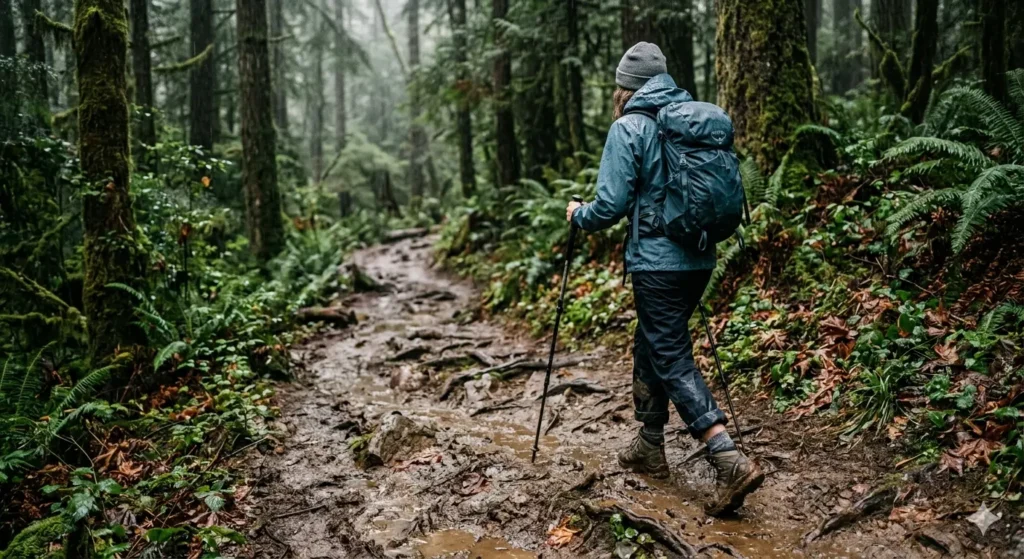
This one’s obvious, but worth saying clearly. If your trail is regularly damp — think Pacific Northwest forests, Scottish highlands, or any trail right after rain — waterproof shoes are worth every penny. Normal mesh shoes soak through almost instantly. Once your feet are wet, blisters become a real risk, your feet get cold, and every step is just miserable. Waterproof membranes like Gore-Tex keep moisture out effectively in these conditions.
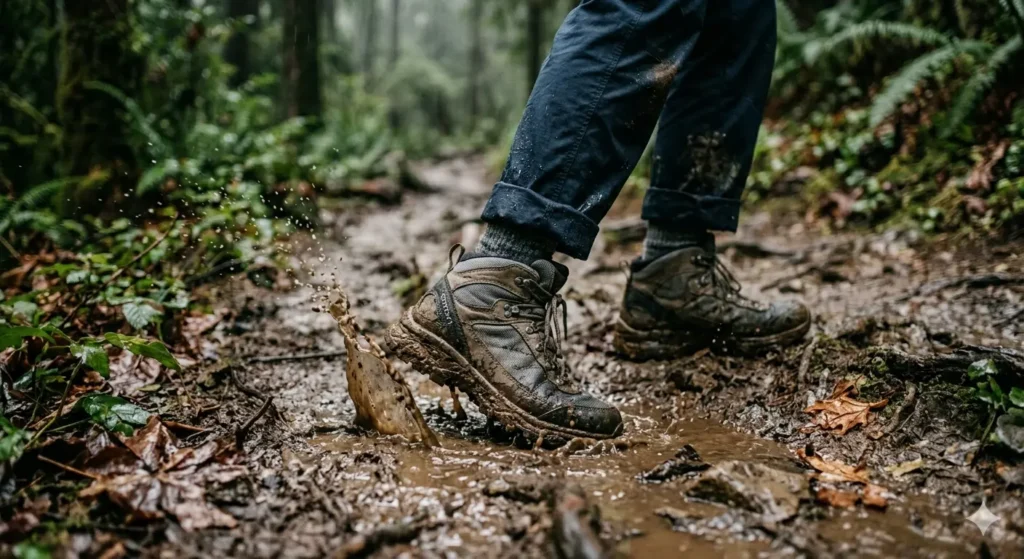
You’re Dealing With Muddy or Swampy Terrain
Mud is sneaky. Even on a day that starts sunny, certain trail types — coastal paths, creek-side routes, shaded forest floors — stay muddy for days after rain. Waterproof hiking footwear handles this well, and the added benefit is that water and mud don’t seep through the upper part of the shoe. Just keep in mind: if you step into deep mud past the ankle collar, no waterproofing saves you.
You’re Hiking in Snow or Cold Weather
Cold plus wet is a combination that makes hiking genuinely dangerous in winter conditions. Waterproof hiking shoes or boots trap a layer of warmth and prevent snowmelt from creeping in through the fabric. If you’re doing any winter hiking — even on trails that “might” have snow — waterproof footwear isn’t optional. Cold, wet feet can escalate into hypothermia risk on longer outings.
You’re Crossing Streams or Wet Rocks
Stream crossings are where non-waterproof trail runners fall apart completely. Waterproof shoes keep your feet dry through shallow crossings and give you better grip on wet rocks. That said, if you’re doing serious river crossings, dedicated water shoes or sandals may be better for deep crossings where total immersion is expected.
When You Don’t Need Waterproof Hiking Shoes
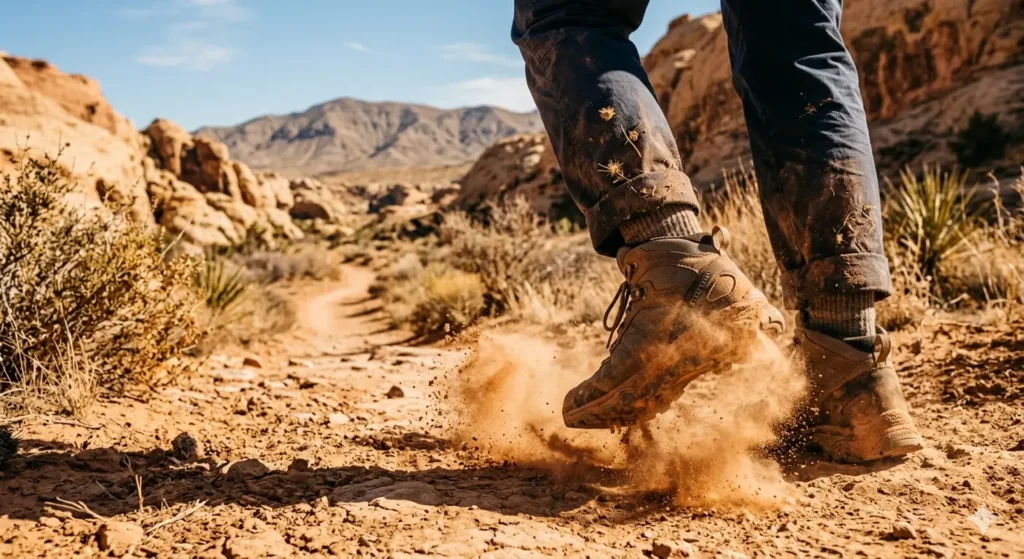
You Hike in Hot or Dry Climates
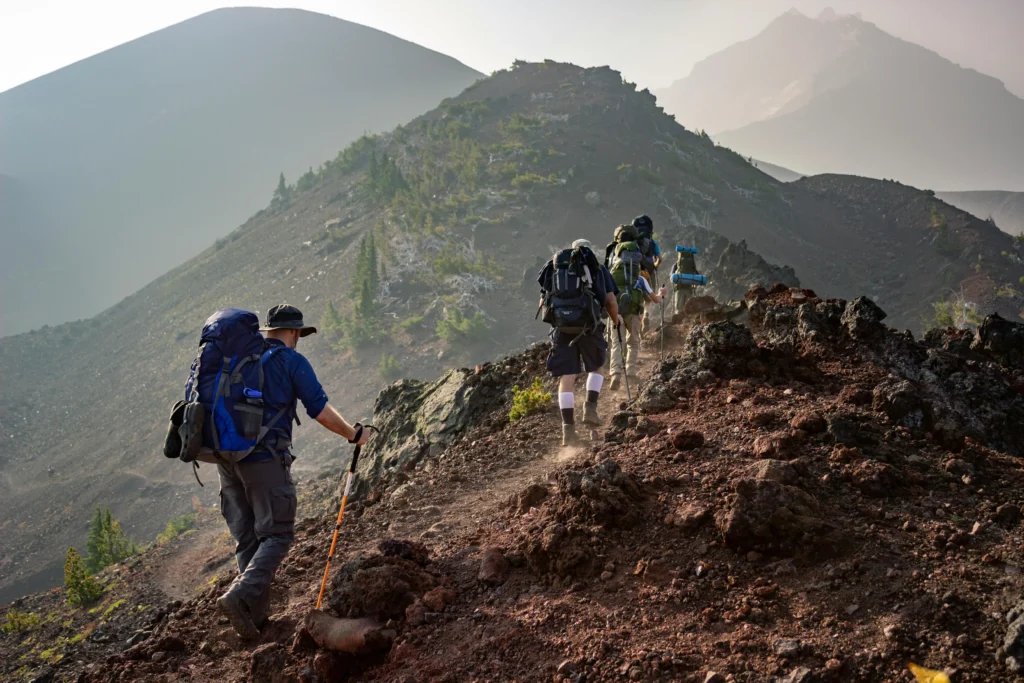
The American Southwest, Southern California, parts of the Mediterranean — these places have dry trails for most of the year. In these environments, waterproof shoes work against you. The membrane that keeps water out also traps heat and sweat in. On a 90°F day in Sedona or Zion, your feet will thank you for breathable trail runners a hundred times over.
Your Trails Are Well-Maintained and Typically Dry
Day hikers who stick to maintained park trails in summer rarely encounter conditions that need waterproofing. Save the money, go with lighter breathable shoes, and enjoy the comfort.
You’re Doing Long-Distance or Multi-Day Hikes in Warm Weather
Thru-hikers on the Appalachian Trail or Pacific Crest Trail often deliberately avoid waterproof shoes in summer — and the reason is simple. Breathability matters more on long miles. Feet that overheat and sweat excessively blister faster than wet feet do. Many experienced long-distance hikers choose trail runners precisely because they dry quickly after getting wet.
Pros and Cons of Waterproof Hiking Shoes
✅ Pros
- Keeps feet dry in rain, mud, and stream crossings
- Warmer in cold and shoulder-season conditions
- Reduces blister risk in wet terrain
- Protects against morning dew and wet trailside vegetation
- Peace of mind on unpredictable weather days
❌ Cons
- Less breathable — feet sweat more
- Heavier than equivalent non-waterproof models
- Take much longer to dry when fully soaked
- Overkill in hot, dry conditions
- Usually more expensive
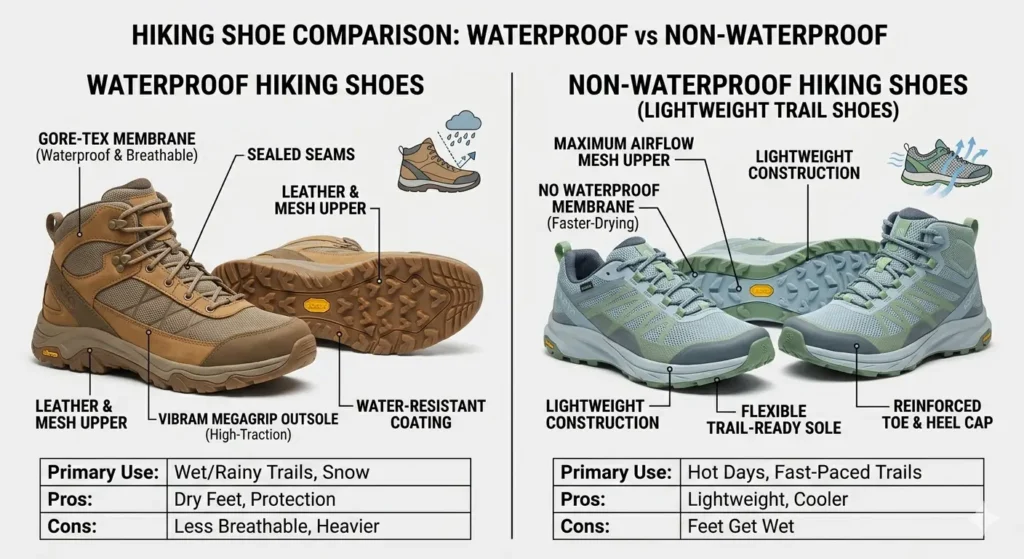
Waterproof vs Non-Waterproof Hiking Shoes
| Feature | Waterproof | Non-Waterproof |
|---|---|---|
| Best conditions | Wet, muddy, cold, snowy | Hot, dry, summer trails |
| Breathability | Low — membrane traps heat | High — mesh flows air freely |
| Drying time | Slow (1–2+ days) | Fast (a few hours) |
| Weight | Slightly heavier | Lighter |
| Blister risk in heat | Higher due to sweat | Lower in dry conditions |
| Price | Higher (Gore-Tex adds cost) | More affordable options |
| Best for | Mixed/wet seasons | Reliable dry seasons |
What Actually Makes a Hiking Shoe Waterproof?
The short answer: a membrane. The most well-known is Gore-Tex, though brands like Salomon (Climasalomon), Merrell (M-Select DRY), and Keen (KEEN.DRY) have their own proprietary versions. These membranes are laminated between the shoe’s outer fabric and the interior lining.
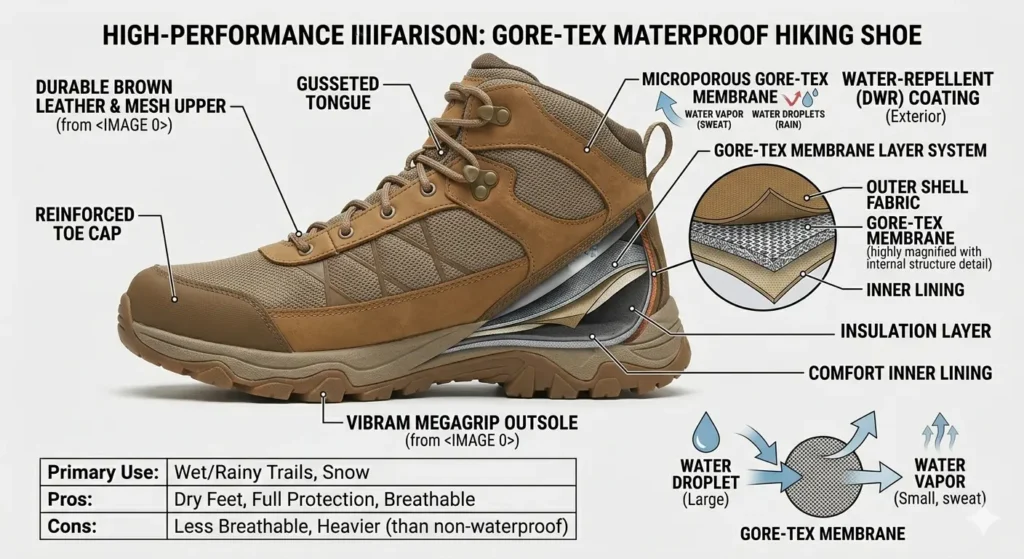
Here’s the clever part: Gore-Tex and similar membranes are microporous — the pores are too small for liquid water to pass through, but large enough to let water vapor (sweat) escape. In theory. In practice, breathability is still far lower than a regular mesh upper. The membrane does help, but it’s not magic.
It’s also worth knowing that waterproofing degrades over time. The Durable Water Repellent (DWR) coating on the shoe’s outer fabric needs re-application every season or so. Without it, the outer fabric gets waterlogged and the membrane has to work harder — reducing breathability further.
Do Waterproof Hiking Shoes Make Your Feet Sweat?
Yes — more than non-waterproof shoes, and you should plan for it. The same membrane that keeps water out limits how quickly sweat vapor can escape. On a warm day, your feet will sweat noticeably more inside a waterproof shoe than in a mesh trail runner. Choosing the right fit is also important — here’s a guide on how tight trail shoes should be.
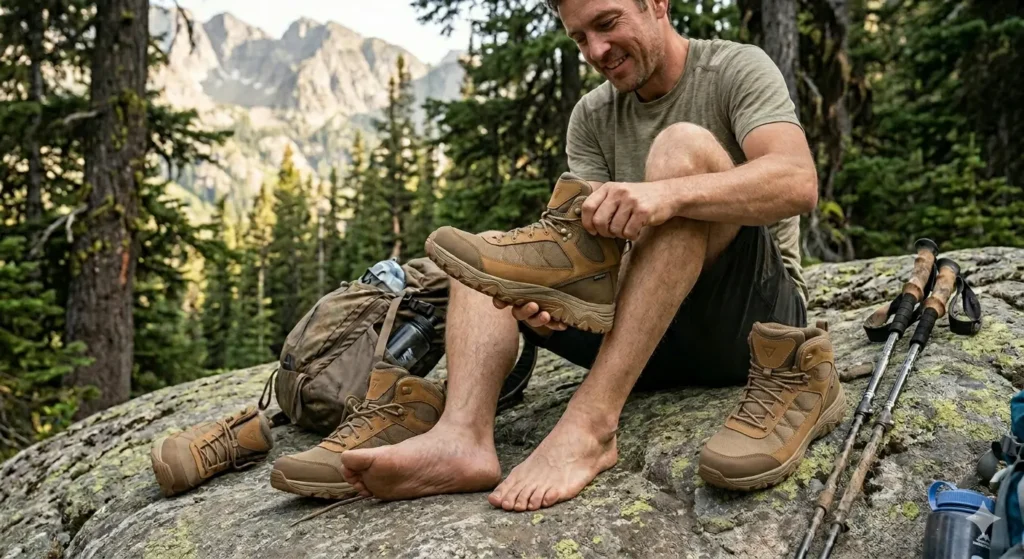
This doesn’t mean waterproof shoes are bad — it just means you need to manage it. A few things that help:
- Wear moisture-wicking merino wool or synthetic hiking socks (never cotton)
- Take breaks to air out your feet on long hikes
- Make sure the shoe fits well so moisture doesn’t pool around pressure points
The sweating issue is the number-one reason experienced hikers recommend against waterproof shoes in hot climates. Excess moisture from sweat softens the skin and dramatically increases blister formation — which is why you’ll often see thru-hikers in non-waterproof trail runners even in wet conditions.
Who Should Buy Waterproof Hiking Shoes?
Comfort matters just as much as waterproofing — especially if you need wide hiking shoes. If any of these sound like you, waterproof hiking shoes are a smart investment:
- Beginner hikers who aren’t sure what conditions they’ll encounter — waterproof is a safe default
- Casual hikers in temperate or coastal regions where rain is common year-round
- Winter and shoulder-season hikers dealing with cold ground, snow, and ice
- Hikers who hate wet feet — some people are far more bothered by this than others
- Parents buying shoes for kids — kids stomp in every puddle regardless of the weather
Who Should Skip Waterproof Hiking Shoes?
If you’re still building your gear, check out what to wear in different conditions in our hiking outfit guide.
- Desert and Southwest hikers — breathability wins in the heat every time
- Summer-only hikers in predictably dry areas
- Long-distance and thru-hikers covering 20+ miles a day — quick-drying ability matters more
- Hikers on a budget — non-waterproof shoes of the same quality cost meaningfully less
Are Waterproof Hiking Shoes Good for Everyday Use?
Honestly, yes — with some caveats. Waterproof hiking shoes tend to look casual enough for everyday wear and handle light rain, puddles, and wet pavement well. If you live somewhere with wet winters and want a shoe that does trail and commute duty, a waterproof hiking shoe is a reasonable choice.
The downside for everyday wear is the same as on trail: your feet will get warmer and sweatier indoors. If you’re wearing them into warm office environments, that’s worth considering before you buy.
Frequently Asked Questions
Are waterproof hiking shoes worth it?
In wet, cold, or muddy conditions — absolutely yes. In hot, dry climates — probably not. Match the shoe to your conditions and they’re very much worth it.
Can I wear waterproof hiking shoes in summer?
You can, but it’s not ideal. Heat and reduced breathability combine to make your feet hot and sweaty. Non-waterproof trail shoes are almost always a better summer choice.
How long do waterproof hiking shoes last?
Typically 500–800 miles of use, though this varies by brand and trail surface. The waterproofing membrane can last the life of the shoe if properly maintained — re-apply DWR treatment every season to keep it performing well.
What’s better — waterproof boots or waterproof trail shoes?
Boots offer more ankle support and a higher waterproofing collar. Trail shoes are lighter and better for easier terrain. For technical or heavy-load hiking, go with boots. For most day hikes, trail shoes are enough.
Do waterproof hiking shoes work in deep water?
Only up to the collar — typically around ankle height. If water pours over the top, the shoe fills up and the waterproofing actually works against you by keeping water trapped inside.
Final Verdict
There’s no universal answer to whether you need waterproof hiking shoes — it comes down to where and when you hike. If your trails are wet, cold, or muddy more often than not, waterproof hiking footwear is one of the best investments you can make. If you’re mostly hiking in summer heat on dry trails, save your money and go breathable.
The smartest approach? Match the shoe to the season and terrain. Some hikers own both — waterproof shoes for fall and spring, non-waterproof trail runners for summer. It’s not overkill; it’s just smart gear selection.
Whatever you choose, fit and comfort matter most. A well-fitting non-waterproof shoe will always beat a waterproof one that rubs you wrong after mile three.
Ready to find the right pair? Check out our guide to the best lightweight waterproof hiking shoes for women — tested across real trail conditions.
This article contains affiliate links. As an Amazon Associate, I earn from qualifying purchases at no extra cost to you.”