
A dirty hat is one thing. A hat you ruined trying to wash it — that’s worse. Knowing how to wash a hat the right way is something most people figure out too late — after a warped brim or a stripped waterproof coating. Whether it’s a baseball cap, a waterproof rain hat, or a bucket hat you wear on every trail, this guide covers the safest cleaning method for every type.
How to Wash a Hat (Quick Answer)
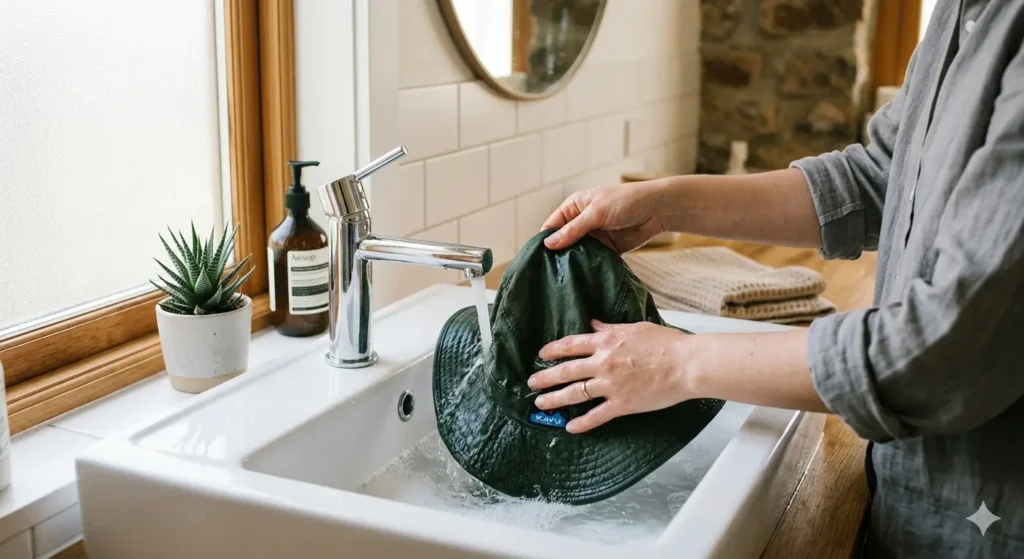
The safest way to wash a hat is to hand wash it in cool water using a small amount of mild detergent. Gently scrub dirty areas, rinse thoroughly, reshape the hat, and let it air dry. Avoid hot water, dryers, and harsh detergents — especially for waterproof hats, which can lose their protective coating.
What’s In This Guide
- Before You Start: Two Checks That Save Your Hat
- How to Hand Wash a Hat (Safest Method)
- How to Wash a Hat in the Washing Machine
- How to Wash a Baseball Hat
- How to Wash a White Hat Without Ruining It
- How to Remove Sweat Stains from a Hat
- Can You Wash a Hat in the Dishwasher?
- How to Wash a Waterproof or Rain Hat
- Washing Guide by Hat Material
- How to Dry a Hat Without Ruining Its Shape
- Mistakes That Ruin Hats
- FAQs
Before You Start: Two Checks That Save Your Hat
Most people skip this part entirely. Don’t. These two checks take about 60 seconds and prevent the most common hat-washing disasters.
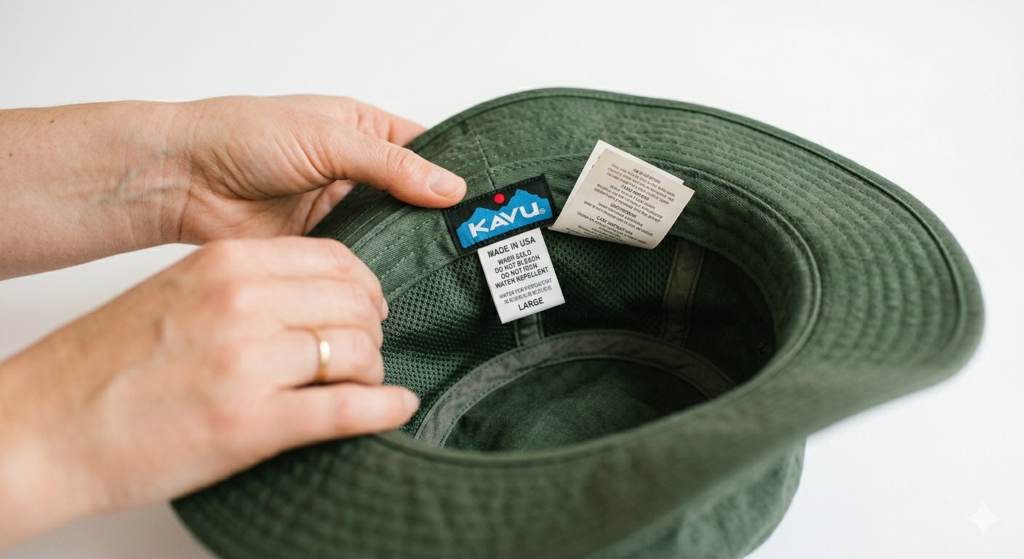
Check 1 — Read the Care Label
Flip your hat over and look inside the band. That small tag tells you exactly what the manufacturer recommends. If it says “spot clean only” — believe it. If the label is faded or missing, move to Check 2.
Check 2 — Cardboard Brim or Plastic Brim?
This one matters more than most people realise. Tap the brim of your hat with your finger. Hear a hollow sound — almost like tapping a thin box? That means your hat has a cardboard brim, which was common in hats made before the mid-1980s.
Never submerge a cardboard-brimmed hat in water. It will warp and never return to its original shape. Spot cleaning only for those.
Plastic brims — used in almost all modern outdoor and hiking hats — are far more forgiving and can handle hand washing and even a gentle machine cycle.
The Colour Bleed Test (Takes 2 Minutes)
Before any full wash, dab a small amount of soapy water on a hidden spot — the underside of the brim or inside the sweatband. Wait two minutes, then press a white cloth against it. If colour transfers onto the cloth, this hat is not safe to submerge. Stick to spot cleaning.
Quick rule: Old hat + hollow brim sound = spot clean only. Modern hat + plastic brim + no colour bleed = safe to wash fully.
How to Hand Wash a Hat (Safest Method for Most Hats)
If you only take one method from this entire guide, make it this one. Hand washing is gentler than any machine, gives you full control over pressure and temperature, and works for almost every hat type — baseball caps, bucket hats, hiking hats, and waterproof rain hats.
- Fill a clean sink or basin with cool or lukewarm water. Not hot — heat is what shrinks fabric and warps brims.
- Add a small amount of mild laundry detergent or baby shampoo. Let it dissolve fully before the hat goes in — concentrated soap sitting directly on fabric can cause uneven fading.
- Do the colour bleed test on a hidden area first if you haven’t already.
- Soak the hat for 10–15 minutes. This loosens dried sweat and trail dirt without needing aggressive scrubbing.
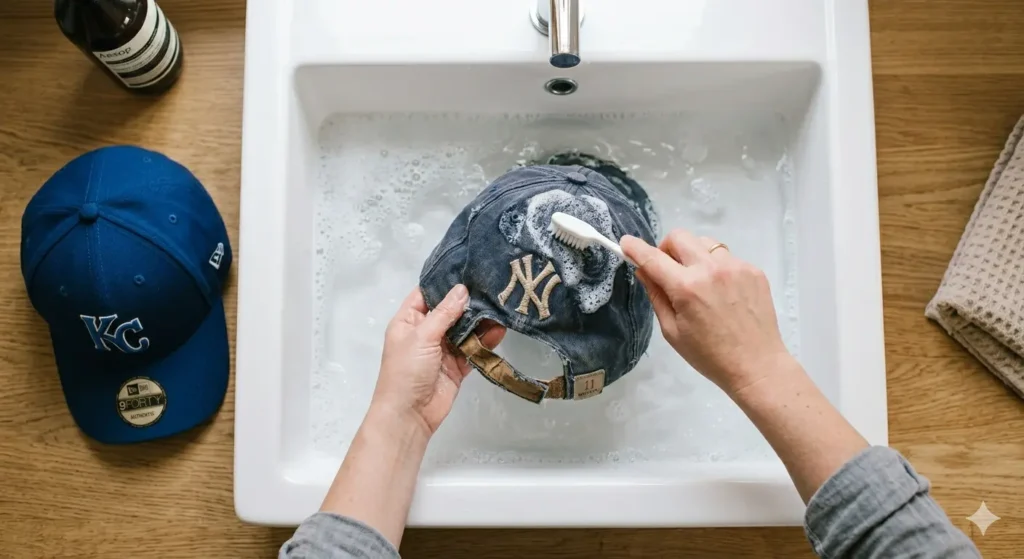
- Use a soft-bristled brush — an old toothbrush works perfectly — to gently scrub problem areas. Focus on the sweatband and the underside of the brim. Use light circular motions, not back-and-forth, which can fray fabric.
- Rinse thoroughly under cool running water until every trace of soap is gone. Leftover detergent stiffens the fabric and attracts more dirt.
- Gently squeeze out excess water — never wring or twist the hat. That’s how brims lose their shape permanently.
- Reshape while damp and air dry (more on this in the drying section below).
Note: For hats with a cardboard brim, do not submerge. Hold the fabric cap portion under water and clean the brim separately with a barely damp cloth.
How to Wash a Hat in the Washing Machine
Machine washing is possible — but it carries the most risk of any method. The tumbling action and water pressure can misshape structured hats, fray embroidery, and destroy the coatings on waterproof gear. Use this only when hand washing isn’t practical.
Only machine wash: unstructured cotton or polyester hats with plastic brims. Never machine wash structured caps, wool hats, felt hats, straw hats, hats with decorations, or anything with a cardboard brim.
- Place the hat inside a mesh laundry bag or hat washing cage. This stops it getting flattened or tangled in the drum.
- Set the machine to a gentle or delicate cycle, cold water only.
- Use a small amount of mild detergent — nothing containing bleach or optical brighteners.
- If your machine has a centre agitator (the rotating post in the middle of the drum), avoid machine washing altogether — the agitation is too rough. Front-loaders and impeller washers are much safer for hats.
- Take the hat out immediately when the cycle ends. Leaving it sitting wet causes it to dry misshapen.
- Reshape by hand and air dry on a hat form or rounded object.
How to Wash a Baseball Hat Properly
Baseball caps are the most commonly washed hat — and the most commonly ruined. The structured front panel and curved brim are what give the cap its shape, and both can be destroyed by one wrong wash.
Hand washing is strongly recommended. If you must machine wash, use a hat cage and a cold gentle cycle only. Avoid the dishwasher (covered below).
For Sweatband Buildup
The sweatband is the dirtiest part of any baseball cap — it absorbs months of oils, sweat, and hair product. Before a full wash, apply a small amount of OxiClean or an enzyme-based cleaner directly onto the sweatband, let it sit for 10 minutes, then proceed with hand washing as normal.
Shape trick: After washing, wear the cap while it’s still slightly damp. As it dries, it moulds exactly to your head — better than any hat form can manage.
How to Wash a White Hat Without Ruining It
White hats show every stain, every sweat mark, and every trail splash. But they’re also the easiest hats to over-treat — most people reach for bleach, which actually yellows white fabric over time and weakens the fibres from the inside out.
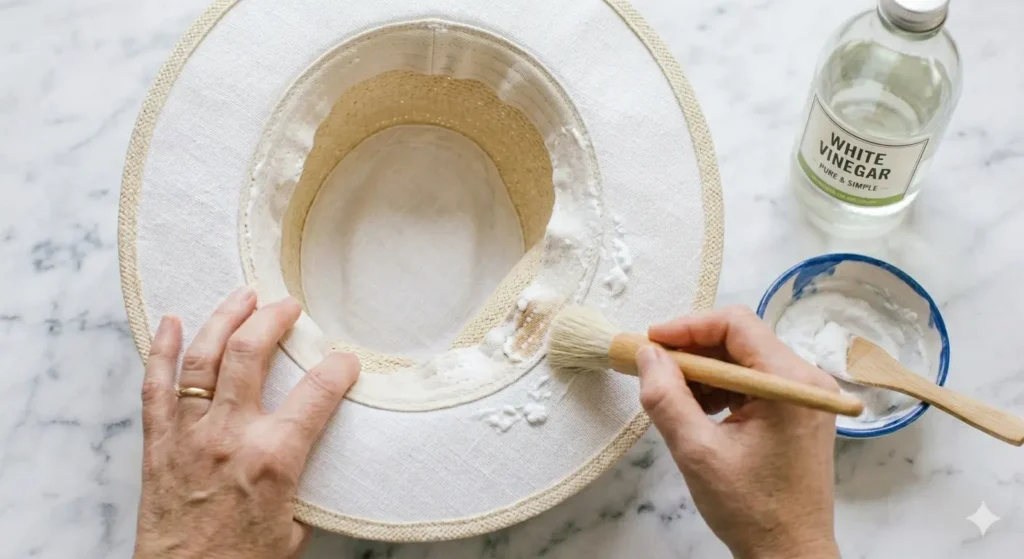
- Make a baking soda paste: mix baking soda with just enough water to make a thick paste — similar to toothpaste consistency.
- Apply the paste directly onto stained areas and leave it for 20–30 minutes.
- Gently scrub with a soft brush.
- For tougher, set-in stains: mix OxiClean with cool water and soak the hat for up to an hour before washing.
- Rinse thoroughly and air dry in the shade — direct sunlight causes yellowing on white fabric.
Never use chlorine bleach on a hat — not even a white one. It weakens fabric over time, causes yellowing with repeated use, and strips colour from stitching and logos.
How to Remove Sweat Stains from a Hat
That yellowish-brown ring around the sweatband or brim? That’s a mix of sweat, skin oils, and salt that builds up over weeks of wear. It looks like a permanent stain — but it’s actually one of the easier marks to treat if you catch it right.
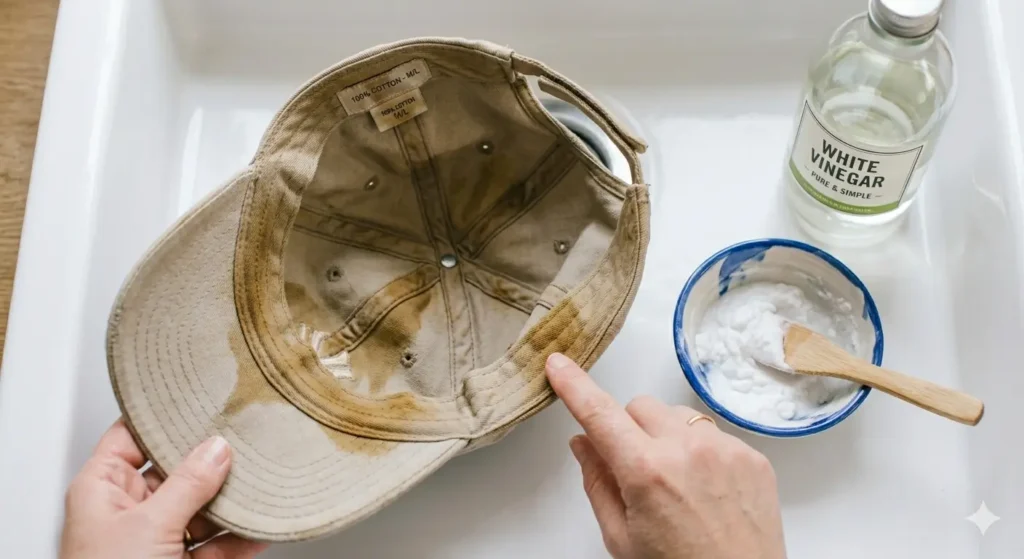
Method 1 — White Vinegar (Gentle, Safe for Most Hats)
- Mix equal parts white vinegar and cool water
- Apply to the stained area with a cloth or soft brush
- Leave for 15–20 minutes
- Gently scrub and rinse thoroughly
Method 2 — Baking Soda Paste (Better for Set-In Stains)
- Mix baking soda and water into a thick paste
- Apply to the stain and leave for 30 minutes
- Scrub lightly with a toothbrush and rinse
Method 3 — OxiClean Soak (For Serious, Long-Standing Stains)
- Mix OxiClean with cool water following the package instructions
- Soak the hat for 30–60 minutes
- Rinse well and air dry
Prevention tip: Use a sweatband liner inside your hat. It’s a thin absorbent strip that sits between your forehead and the hat fabric, catching sweat before it soaks through. They’re inexpensive, washable, and dramatically extend the time between full hat washes.
Can You Wash a Hat in the Dishwasher? (The Honest Answer)
You’ve almost certainly seen this advice before — “just put your hat on the top rack of the dishwasher.” It’s one of the most shared hat cleaning tips on the internet. It’s also, in most cases, bad advice.
Here’s why it causes problems:
- Dishwasher detergents often contain bleach — damaging to fabric dyes and logo stitching
- Dishwashers run at high heat during both washing and drying cycles — that heat warps brims and shrinks fabric
- The water jets are high pressure and not designed for delicate items
That said — if your hat is a very sturdy, structured cap with a plastic brim, and you use a minimal amount of gentle detergent on a low-heat light cycle with the heated dry switched off, the risk is lower. A hat cage helps maintain shape. But hand washing gives you a better result in less time with far less risk.
Bottom line: The dishwasher is a last resort for specific hat types — not a general recommendation. Hand washing takes 10 minutes and protects your hat far better.
How to Wash a Waterproof or Rain Hat (Read This Before You Do Anything)
Waterproof hats are fundamentally different from regular hats in one critical way: they have a DWR coating — Durable Water Repellent — applied to the outer fabric. This coating is what makes water bead off the surface instead of soaking in. And it can be permanently damaged by the wrong cleaning method.
If you own a waterproof bucket hat, a packable rain hat, or any hiking hat with a waterproof finish — this section is the most important one for you.
Do NOT use regular laundry detergent on waterproof hats. Standard detergents contain surfactants that actively break down the DWR coating. Once it’s stripped, the hat absorbs water instead of shedding it — and the hat’s main job is gone.
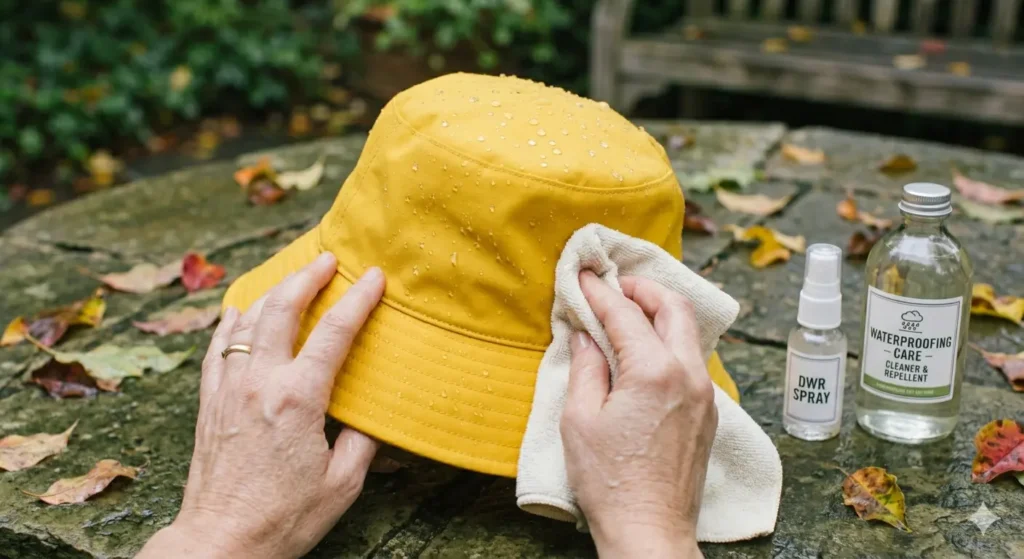
The Correct Way to Wash a Waterproof Hat
- Brush off loose dirt with a soft dry brush before any water touches the hat.
- For light cleaning: wipe down with a damp cloth only — no soap at all. This handles trail dust and light surface grime without any risk to the coating.
- For deeper cleaning: hand wash only, using a technical cleaner specifically formulated for waterproof gear — such as Nikwax Cap and Hat Wash. These products clean effectively without stripping the DWR.
- Rinse very thoroughly. Any detergent residue left in the fabric attracts dirt and reduces water repellency over time.
- Air dry completely — no dryer, no radiator, no direct sun exposure.
- Reactivate the DWR coating once fully dry: tumble dry on low heat for 10–15 minutes, or apply a DWR spray treatment and allow to dry. This step restores water-beading performance.
If you’re shopping for a new waterproof hat that holds up wash after wash, I’ve reviewed the best options available right now: 7 Best Waterproof Bucket Hats for Women (2026 Buyer’s Guide).
What About Bucket Hats?
Most non-waterproof fabric bucket hats — cotton, polyester, nylon — are safe for gentle hand washing or a delicate machine cycle in a laundry bag. Always check the care label first, as construction quality varies widely between brands.
Washing Guide by Hat Material
Different fabrics need completely different care. This is where most hat damage actually happens — not from being washed, but from being washed with the wrong method for the material.
| Material | Safe Cleaning Method | What to Avoid |
|---|---|---|
| Cotton | Hand wash or gentle machine cycle | Hot water, bleach |
| Polyester | Hand wash or gentle machine cycle | High heat, strong detergents |
| Wool | Hand wash only — cold water, wool-safe detergent | Machine wash, hot water, wringing |
| Straw | Spot clean with damp cloth only | Any water submersion |
| Felt | Spot clean or dry brush only | Water submersion, machine wash |
| Waterproof / DWR-coated | Damp cloth or technical cleaner (e.g. Nikwax) | Regular detergent, machine wash, tumble dry |
| Acrylic / Poly blend | Hand wash or gentle machine cycle | Hot water, fabric softener |
| Cashmere / Silk | Hand wash only — very cold water | Any machine washing, wringing |
| Nylon | Hand wash or gentle machine cycle | High heat, abrasive scrubbing |
How to Dry a Hat Without Ruining Its Shape
This is where a lot of people go wrong. Washing the hat correctly and then drying it badly is one of the most common causes of warped, floppy, or misshapen hats. Heat and gravity are your two enemies at this stage.
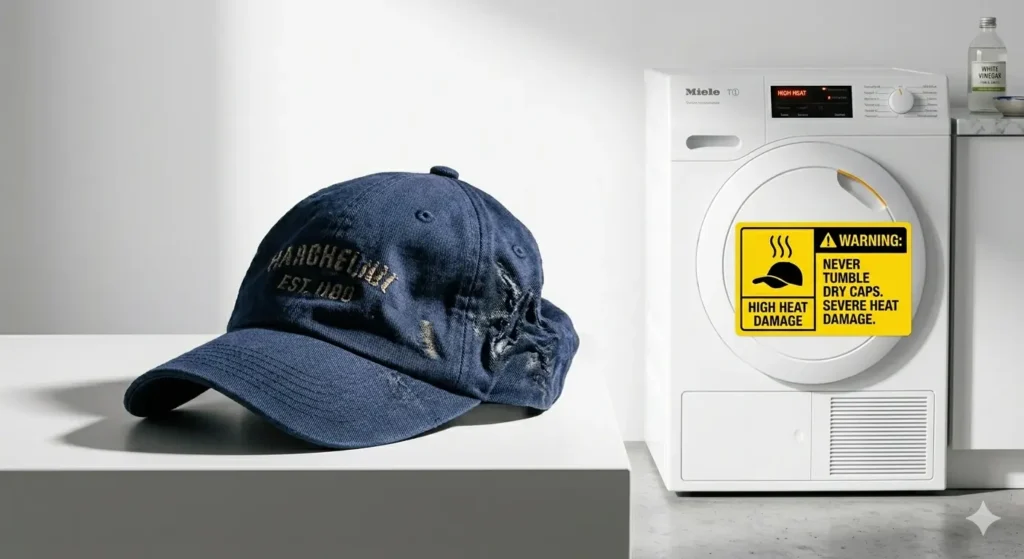
- Never use a tumble dryer — heat shrinks fabric, warps brims, and destroys waterproof coatings. The only exception is a very brief low-heat cycle to reactivate DWR on waterproof hats.
- Never hang a hat by the brim — the weight of the hat will pull the brim downward and out of shape as it dries.
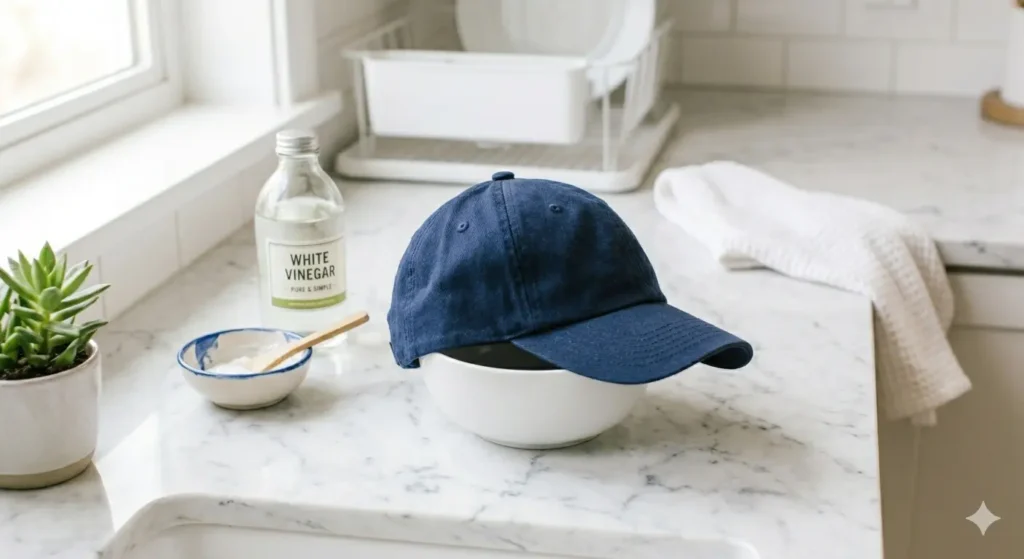
- Place structured caps on a rounded object that fits inside the crown — a coffee tin, a bowl turned upside down, or a purpose-made hat form. This holds the shape while drying.
- Best trick for baseball caps: wear the cap while it’s slightly damp. It moulds to your exact head shape as it dries — more effective than any hat form.
- Bucket hats and unstructured hats: lay flat on a clean dry towel to keep their shape.
- Waterproof and rain hats: air dry in a ventilated area away from direct sunlight and away from any heat source.
- Avoid drying near radiators or in direct sun for extended periods — both accelerate fading.
Mistakes That Ruin Hats (And What to Do Instead)
| The Mistake | What Goes Wrong | What to Do Instead |
|---|---|---|
| Using hot water | Shrinks fabric, warps brim shape | Always use cool or lukewarm water |
| Putting hat in the dryer | Shrinks, warps, destroys coatings | Air dry on a hat form or rounded object |
| Using bleach on white hats | Yellowing over time, weakens fibres | Use baking soda paste or OxiClean instead |
| Scrubbing too hard | Fraying, pilling, colour removal | Light circular motions with a soft brush |
| Skipping the colour bleed test | Dye bleeds, hat is permanently stained | Always test a hidden area before full wash |
| Regular detergent on waterproof hats | DWR coating stripped — hat no longer waterproof | Use a technical cleaner like Nikwax only |
| Submerging a cardboard-brimmed hat | Brim warps and cannot be fixed | Spot clean the brim with a damp cloth only |
| Wrong machine cycle or temperature | Shape loss, shrinkage, fabric damage | Delicate cycle, cold water, mesh bag always |
Frequently Asked Questions
What is the safest way to wash any hat?
Hand washing in cool water with a small amount of mild detergent. It works for almost every hat type, gives you full control over pressure and temperature, and eliminates the risks that come with machine washing or dishwashers.
Can I put a baseball cap in the washing machine?
Yes — but only if it’s an unstructured cotton or polyester cap with a plastic brim. Use a hat cage or mesh laundry bag, cold water, and a gentle cycle. Avoid machines with a centre agitator, as the motion is too rough for structured hats.
How do I know if my hat has a cardboard or plastic brim?
Tap the brim firmly with your finger. A hollow, stiff sound suggests cardboard — this was common in hats made before the mid-1980s. A more flexible brim with a solid, quiet sound is almost certainly plastic and safe to wash normally.
Can you wash a waterproof hat in the washing machine?
No — machine washing with regular detergent will strip the DWR waterproof coating. For light cleaning, wipe with a damp cloth only. For a deeper clean, hand wash using a specialist technical cleaner like Nikwax. Never use a standard washing machine cycle.
How do I keep my hat from losing its shape after washing?
Reshape the hat by hand while it’s still damp, then place it on a rounded object — a coffee tin, upturned bowl, or hat form — and let it air dry. For baseball caps, wearing the hat while slightly damp gives the best result, as it dries to your exact head shape.
How often should I wash my hat?
It depends on how frequently you wear it and how much you sweat. For everyday summer wear or active hiking: every 2–4 weeks. For occasional use: whenever it’s visibly dirty or beginning to smell. Over-washing shortens the lifespan of any hat, so only wash when genuinely needed.
Can I wash a wool hat?
Yes, but very carefully. Hand wash only in very cold water using a wool-specific detergent. Never wring the hat, never machine wash, and never put it anywhere near a dryer. Lay it flat on a clean towel to dry. Wool shrinks and felts easily — one hot wash can ruin a wool hat permanently.
Does washing a waterproof hat ruin the waterproofing?
Only if you use the wrong products. Regular laundry detergent breaks down the DWR coating over time. A technical cleaner designed for waterproof gear — like Nikwax — cleans without damaging the finish. After washing, a brief low-heat tumble dry or DWR spray treatment reactivates the water-repellent performance.
Final Thoughts
Most hat damage doesn’t happen from wear — it happens from one careless wash.
A hat that’s cleaned correctly can last for years of hard trail use. A hat that goes through the wrong cycle, at the wrong temperature, with the wrong detergent? You might get one bad wash out of it before the brim warps or the waterproofing disappears.
The approach is straightforward: check the care label, identify your brim type, hand wash when you’re uncertain, and keep your waterproof hats well away from regular detergent. Ten minutes done right is worth far more than five minutes done carelessly.
If you’re looking for a hat that’s genuinely built for trails and rain, check out our guide to the best waterproof bucket hats for women — hats tested for real outdoor conditions, not just fair-weather wear.
This article contains affiliate links. As an Amazon Associate, I earn from qualifying purchases at no extra cost to you.