You’re two miles in, the sun is directly overhead, and your shirt is already soaked through. Your feet feel swollen inside shoes that fit fine back in April. This is the moment most hikers realize their summer kit isn’t actually built for summer — it’s just their regular gear, minus a jacket.
Figuring out what to wear hiking in summer is less about packing light and more about picking the right materials, fit, and timing. Heat, humidity, and sun exposure add up in ways cold weather never does, and the wrong fabric or fit can turn a good trail day into a miserable one. Here’s what actually works, based on what happens once you’re a few miles from the trailhead and the temperature has climbed past 85°F.
Why Dressing for Summer Hiking Is Its Own Skill
Cold-weather hiking is mostly about layering and staying warm. Summer flips the problem entirely: now you’re managing sweat, sun exposure, chafing, and heat buildup, often all at once. If you’ve read our guide on what to wear hiking in winter, you already know layering is the name of the game there — summer is closer to the opposite, where less fabric done right beats more fabric done wrong.
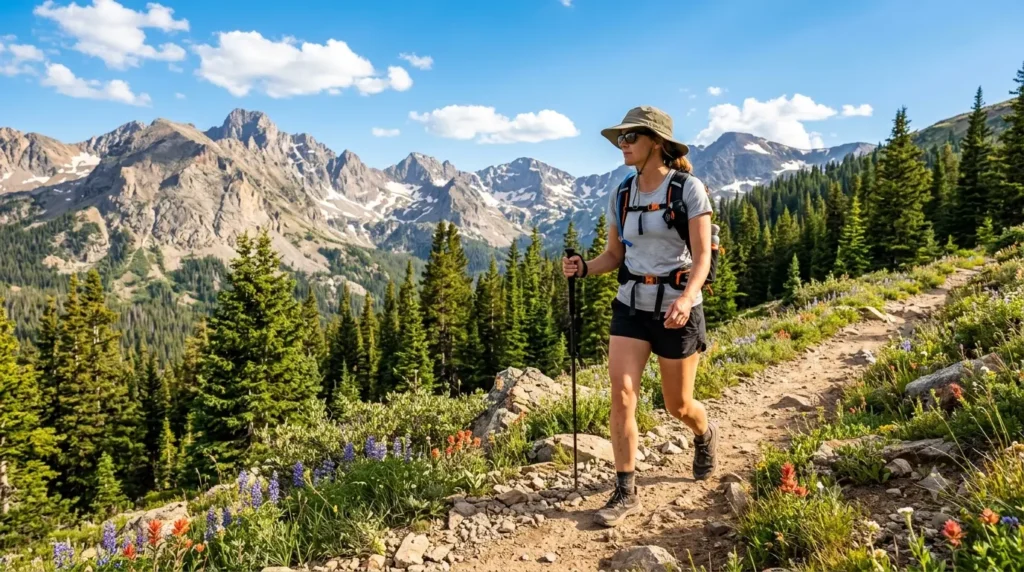
The goal in hot weather isn’t just “wear less.” It’s choosing materials and cuts that move moisture off your skin, block UV rays, and don’t turn into a swamp by mile three.
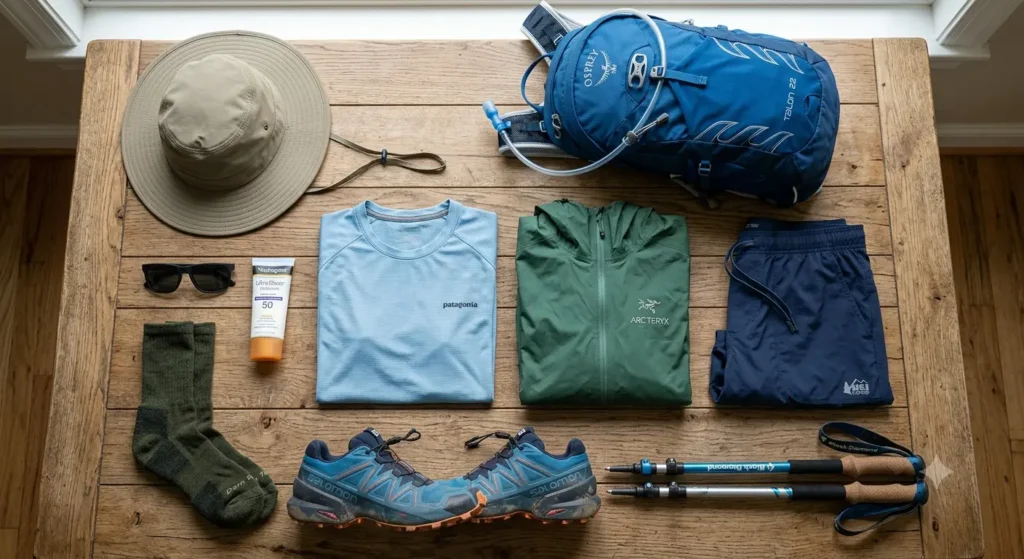
When and Where You Hike Matters as Much as What You Wear
Before you even get to clothing, timing changes everything. The hottest stretch of most days runs from late morning to mid-afternoon, so starting early — or hiking later in the evening — cuts your heat exposure dramatically on the same trail.
- Start early or hike late. An early start beats the heat and usually gets you better light for photos too.
- Pick trails with shade or water. Tree cover, canyon walls, or a route that runs along a stream or lake keeps you noticeably cooler than fully exposed ridgelines.
- Check the forecast for humidity, not just temperature. High humidity slows sweat evaporation, which is what actually cools you down — a humid 85°F day can feel harder than a dry 95°F one.
Tops: Why Cotton Fails You on the Trail
Most hikers get this wrong before they even leave the parking lot: they wear a cotton t-shirt because it’s what’s comfortable at home. Cotton soaks up sweat and holds onto it, which means it stays wet against your skin for hours. On a humid trail, that’s a recipe for chafing, and if the temperature drops later in the day, that wet cotton can leave you chilled.
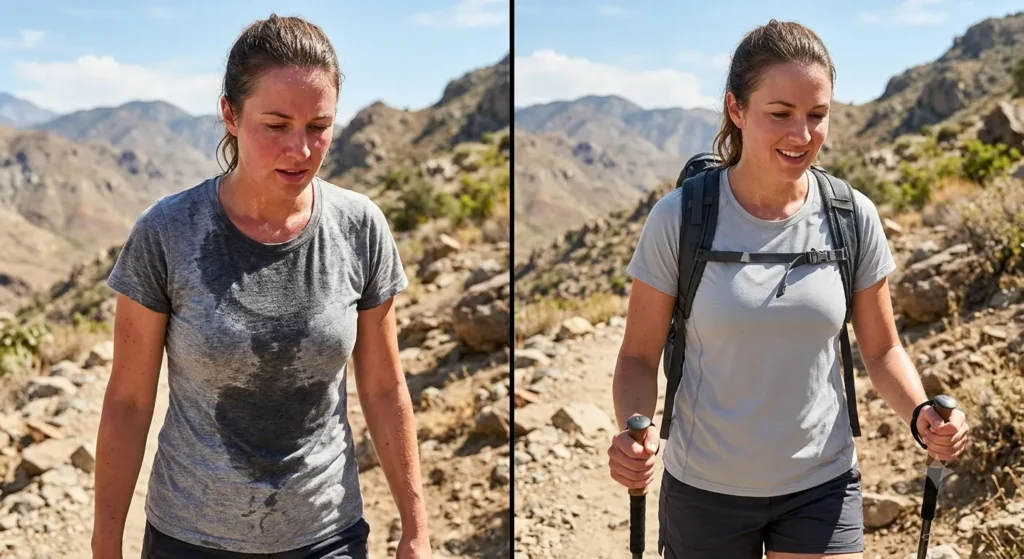
What actually works:
- Synthetic technical fabrics (polyester or nylon blends) — wick sweat fast and dry quickly, the default choice for hot, sweaty miles
- Merino wool — regulates temperature well and resists odor, though it runs warmer than synthetics for peak summer heat
- Loose, breathable weaves — a slightly looser fit lets air move across your skin instead of trapping heat against it
Light colors matter more than people expect. Dark fabric absorbs heat, and on an exposed ridge with no shade, that difference is noticeable within an hour. If you’re prone to sunburn, look for a UPF rating on your shirt — it’s a built-in layer of sun protection you don’t have to reapply every two hours.
What Shoes to Wear Hiking in Summer
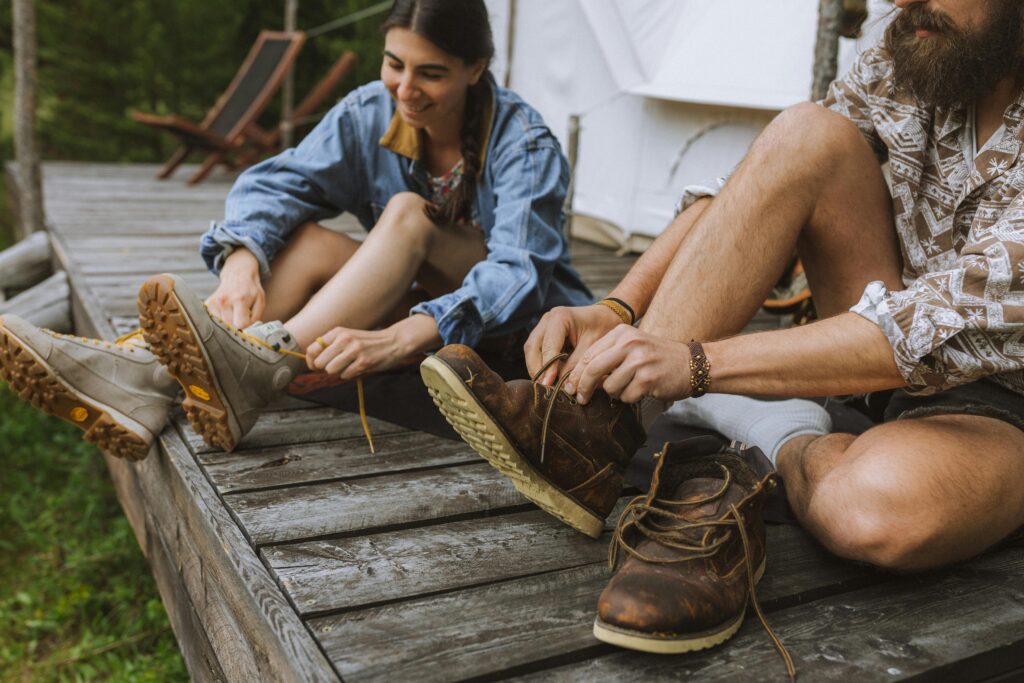
Feet swell in heat. A shoe that fits perfectly on a cool morning can feel a full size too small by mid-afternoon on a hot trail. This is why so many summer blister complaints aren’t actually about the shoe model — they’re about fit.
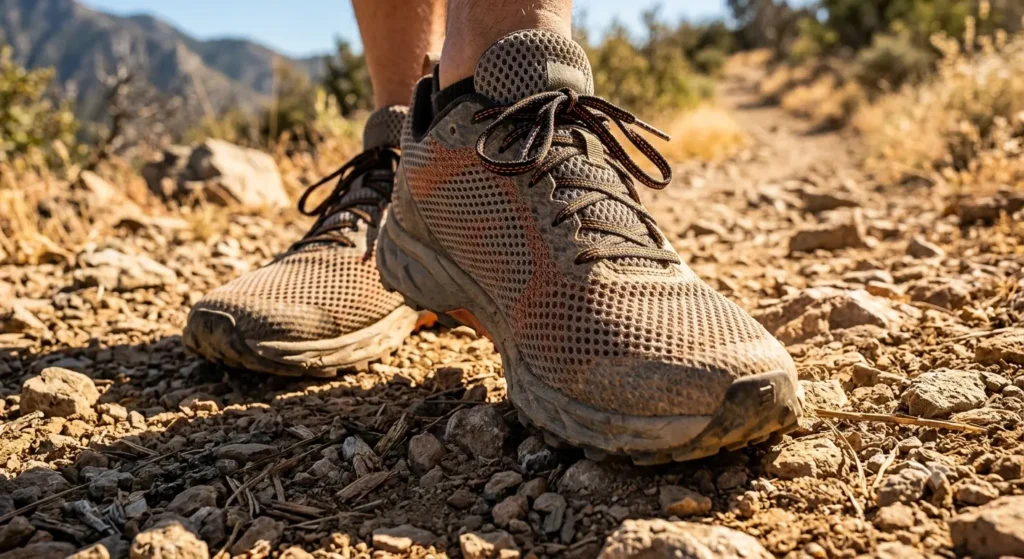
A few things worth sorting out before you hit the trail:
- How tight your shoes should actually be — there’s a real answer here, and it’s looser than most people assume; see how tight should trail shoes be for specifics
- Toe box room — swelling feet need space, which is why wide toe box shoes and wide hiking shoes come up so often in summer hiking forums
- Breathability over waterproofing — waterproof membranes trap heat, which matters more in summer than the water resistance usually does; our comparison of waterproof vs. non-waterproof hiking shoes and do I need waterproof hiking shoes walks through when it’s actually worth it
If you’re hiking somewhere with regular water crossings or frequent storms, the best waterproof hiking shoes for women is still worth a look — but for dry, hot trails, a breathable mesh shoe will keep your feet cooler and happier.
What Socks to Wear Hiking in Summer
Cotton socks in summer are almost worse than a cotton shirt, because your feet sweat more than you realize and blisters form fast in a wet sock. From experience, this is one of the cheapest upgrades that makes the biggest difference on a hot-weather trail day.
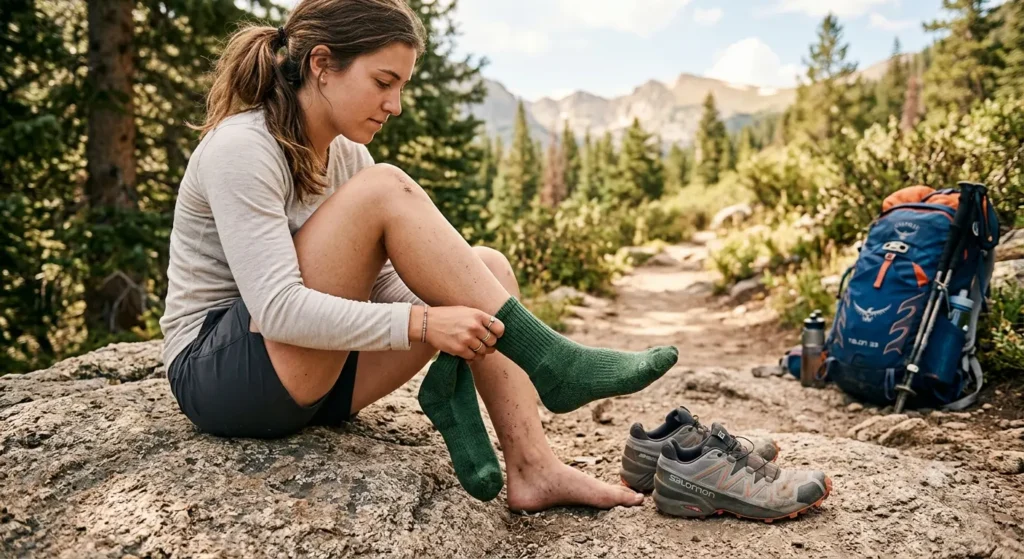
Our guide to women’s hiking socks for summer goes deeper into fabric blends, but the short version: look for merino or synthetic blends with some cushioning at the heel and ball of the foot, and skip anything marketed as an “everyday cotton crew.” If you’re hiking somewhere with ticks, a slightly taller sock paired with lightweight pants offers real protection without much added heat.
Bottoms: Shorts vs. Lightweight Pants
This is a genuine trade-off, and the right answer depends on the trail. Shorts breathe better and dry faster after river crossings or sudden rain. Lightweight, sun-protective pants keep bugs and brush off your legs and reduce sunburn risk on long exposed stretches.
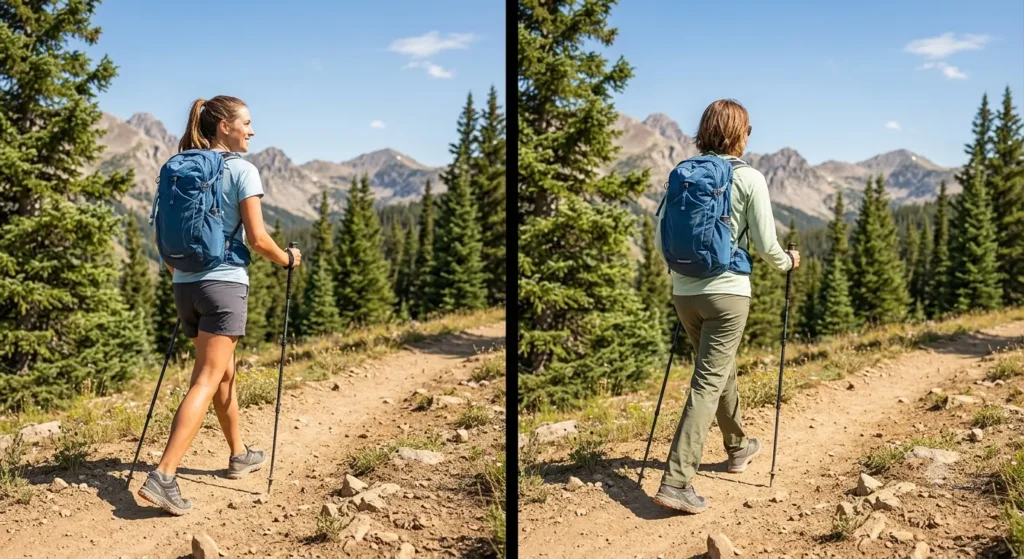
If you’re leaning toward shorts, our breakdown of the best hiking shorts for women covers fit and fabric considerations worth checking before you buy — especially around inseam length and chafe-prone seams, which matter more on longer days than most people expect.
For pants, look for:
- UPF-rated fabric for sun protection
- A quick-dry synthetic blend, not cotton denim
- Articulated knees if you’re doing any scrambling
Whatever you pick for bottoms, it’s worth packing a compact wicking layer underneath too — cotton underwear traps moisture the same way a cotton shirt does, and it’s an easy fix most people overlook.
Sun Protection: The Piece People Forget
Sunburn doesn’t just hurt — it messes with your body’s ability to regulate heat, which makes everything else on this list harder. Sun protection isn’t only about your arms and face, either; your ears, the back of your neck, and your scalp burn just as easily and get forgotten just as often.
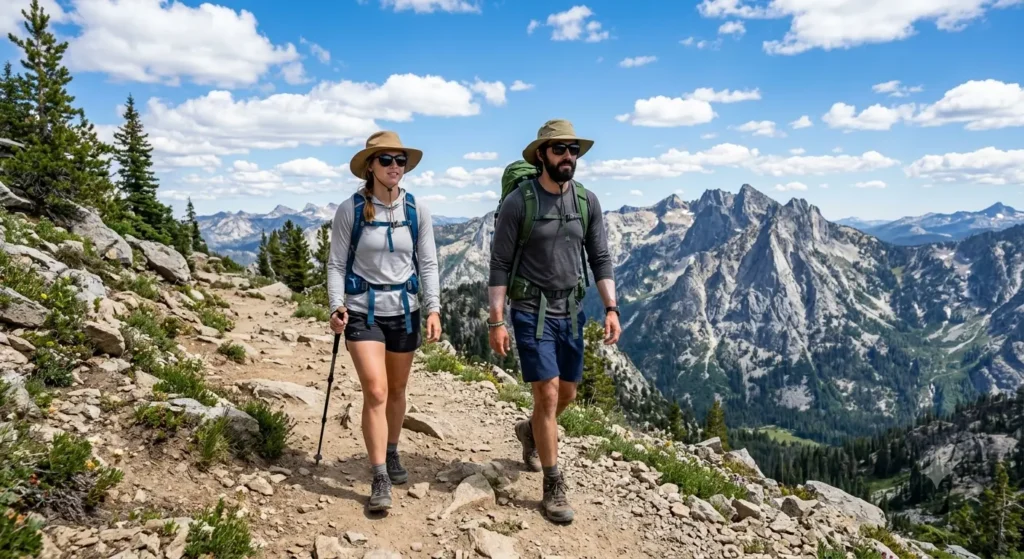
Options worth building into your kit:
- A wide-brim bucket hat for full coverage on exposed trails, including ears and neck
- A packable hat or packable option that fits in your pack when you’re moving in and out of tree cover
- A bandana or lightweight cloth you can wet and drape over your neck — the evaporation has a real cooling effect on hot, dry trails
- Sunscreen reapplied roughly every two hours, more often if you’re sweating heavily
Recommended Product: UPF Sun Protection Hiking Shirt
If you’re hiking in strong summer sun, a regular t-shirt isn’t enough — you’ll feel the heat quickly, and your skin gets exposed faster than you think.
A lightweight UPF-rated long sleeve shirt is one of the most effective upgrades you can make for summer hiking. It blocks UV rays, keeps airflow moving, and reduces the need for constant sunscreen reapplication.
⭐ NIASHOT Women’s UPF 50+ Hiking Sun Shirt
NIASHOT Womens Workout Top Long Sleeve UPF 50+ Hiking Sun Shirt
Why it fits summer hiking:
- UPF 50+ sun protection (reduces UV exposure)
- Lightweight moisture-wicking fabric for hot weather
- Breathable mesh panel design improves airflow
- Thumbholes for added sun coverage on hands
- Works well for hiking, walking, and outdoor travel
Staying Cool and Hydrated
Clothing only does half the job in summer heat — how you manage water and salt intake does the rest. Heavy sweating strips more than just water from your system, and drinking plain water for hours without replacing sodium can actually leave you feeling worse, not better.
- Drink before you’re thirsty, in small, steady amounts rather than large gulps all at once
- Add electrolytes on longer or hotter hikes, whether that’s a powder mix or salty snacks like trail mix or jerky
- Watch for early warning signs of heat exhaustion: heavy sweating, dizziness, nausea, or unusual fatigue are all signals to stop, find shade, and rehydrate before continuing
Heat exhaustion that isn’t addressed can progress to heat stroke, which is a medical emergency. If someone stops sweating, becomes confused, or their skin feels hot and dry, that’s a sign to cool them down immediately and seek help — this isn’t something to push through.
What to Carry: The Pack Matters Too
Your clothing choices don’t operate in isolation — what you’re carrying water in, and how your pack sits on your back, affects how hot you get. A pack that sits too high or doesn’t breathe at the back panel adds a sweaty layer you didn’t ask for. If you’re shopping for a new one, the best hiking backpacks for women covers ventilated back panels and capacity sizing for day hikes versus longer trips.
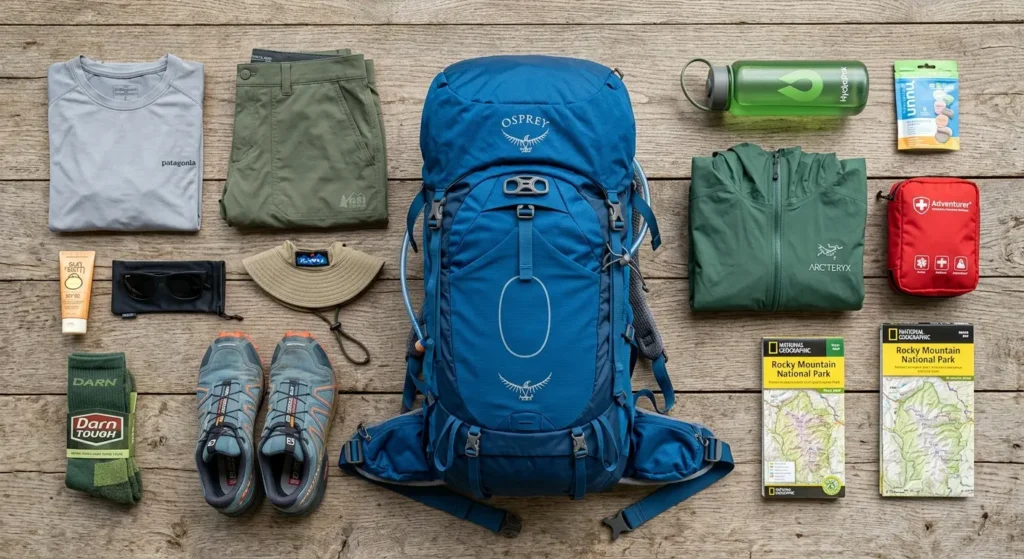
It’s also worth tucking a very lightweight rain shell into your pack even on a clear-forecast day. Summer weather turns fast, especially at elevation, and a compact packable rain jacket takes up almost no space for the protection it offers.
Common Summer Hiking Mistakes to Avoid
- Wearing brand-new shoes on a summer hike — heat plus friction plus unbroken-in shoes is a fast track to blisters
- Skipping electrolytes and only drinking plain water — heavy sweating strips more than just water from your system
- Starting too late in the day — the heat difference between a 7 a.m. start and an 11 a.m. start on an exposed trail is significant
- Overpacking layers “just in case” — summer trails rarely need the same layering system as winter ones
- Ignoring sock fit because “it’s just a short hike” — blisters don’t care how long the hike was supposed to be
Beginner Tips for Hot-Weather Hikes
- Check the terrain and shade coverage before you go — a fully exposed ridge hike needs more sun prep than a forested trail
- Bring more water than you think you need; heat increases fluid loss faster than most people plan for
- Test your full outfit — shirt, shorts or pants, socks, and shoes — on a shorter walk before committing to a long summer trail
- Give your body time to adjust to hot conditions if you’re new to summer hiking; hiking easier or shorter routes for your first few hot-weather outings makes the heat far more manageable
For a broader starting point on trail clothing in general, what to wear hiking as a woman is a good overview to pair with this summer-specific breakdown.
FAQ: What to Wear Hiking in Summer
What to wear hiking in the summer?
Lightweight, moisture-wicking synthetic or merino wool tops and bottoms, breathable non-waterproof shoes with room in the toe box, moisture-wicking socks, and a wide-brim hat for sun protection. Skip cotton everywhere except in very dry, mild heat.
What shoes to wear for hiking in summer?
Breathable, non-waterproof trail shoes are usually the better choice, since waterproof membranes trap heat. Look for a roomier toe box than you’d normally choose, since feet swell over the course of a hot hike.
What socks to wear hiking in summer?
Merino wool or synthetic wicking socks, not cotton. Cotton holds sweat against the skin and significantly increases blister risk on hot, sweaty hikes.
Should I wear cotton clothing for summer hikes?
Generally, no. Cotton holds sweat against your skin instead of wicking it away, which leads to chafing and discomfort on longer hikes. Synthetic or merino wool blends perform much better in heat.
Are waterproof hiking shoes too hot for summer?
Often, yes. Waterproof membranes trap heat and reduce breathability, which matters more in summer than the water resistance does — unless you’re regularly crossing streams or hiking in frequent rain.
Do I need a hat for summer hiking?
Yes, especially on exposed trails with little shade. A wide-brim or packable hat reduces sunburn risk on your face, ears, and neck, and helps your body regulate heat more effectively.
What’s the biggest mistake people make dressing for summer hikes?
Wearing cotton and underestimating how much feet swell in heat — both lead to the most common summer trail complaints: chafing and blisters.
Affiliate Disclosure: This post contains Amazon affiliate links. As an Amazon Associate, I earn from qualifying purchases. If you click on a link and make a purchase, I may receive a small commission at no additional cost to you. This helps support the site and allows me to continue creating helpful content.