If you’ve ever pulled off a hot, sweaty hiking boot after a summer trail and sworn you’d never do that again, you already know why hiking sandals exist. They solve real problems: sweaty feet, slow-drying shoes after a creek crossing, and the bulk of carrying a second pair of shoes for camp. But the wrong pair creates new problems — blisters from stiff straps, a rolled ankle from zero support, or a stubbed toe on a rocky descent.
This guide breaks down the best women’s hiking sandals for 2026, from budget-friendly arch-support picks to closed-toe options built for rocky terrain. We’ll cover what actually matters when you’re shopping — arch support, traction, fit, and water performance — so you can pick the pair that fits your feet and your trails, not just the one with the best photos.
A quick note on how this guide was built: These recommendations are based on manufacturer specifications, verified customer feedback, and side-by-side comparison research rather than firsthand wear-testing of every pair. Where a brand or reviewer noted a specific limitation (sizing, drying time, break-in period), we’ve included it so you can make an informed call.
📋 Table of Contents
- Quick Comparison: Best Women’s Hiking Sandals at a Glance
- The 11 Best Women’s Hiking Sandals, Reviewed
- 1. Teva Hurricane XLT2 — Best Overall
- 2. KEEN Newport H2 — Best Closed-Toe
- 3. Chaco Z/Cloud 2 — Best for Arch Support
- 4. Muboliy Hiking Sport Sandals — Best Budget Pick
- 5. Skechers Arch Fit Reggae Sport — Best for Plantar Fasciitis
- 6. Merrell Terran 4 Post Wrap — Best Everyday-to-Trail
- 7. Columbia Konos Hiker 2-Strap — Best Traction
- 8. Chaco Z/1 Classic — Best Minimalist & Most Durable
- 9. Bedrock Cairn Evo — Best for Backpacking
- 10. Vionic Tide II Toe Post — Best for Foot Pain
- 11. CIOR Sport Sandals — Best Value for Wide Feet
- Buying Guide: How to Choose the Right Hiking Sandal
- Hiking Sandals vs. Other Footwear
- How to Care for Your Hiking Sandals
- Common Mistakes to Avoid
- Frequently Asked Questions
- Final Thoughts
Quick Comparison: Best Women’s Hiking Sandals at a Glance
Here’s how our top picks stack up. “Editor Rating” reflects our own research-based scoring out of 5, not an Amazon customer rating.
| Product | Best For | Arch Support | Water-Ready | Weight | Editor Rating |
|---|---|---|---|---|---|
| Teva Hurricane XLT2 | Best Overall | Moderate (EVA + nylon shank) | Yes, quick-dry | ~15.5 oz/pair | 4.6/5 |
| KEEN Newport H2 | Best Closed-Toe | Yes, EVA insole | Yes, quick-dry | ~21 oz/pair | 4.7/5 |
| Chaco Z/Cloud 2 | Best Arch Support | Yes, LUVSEAT (APMA-accepted) | Yes, quick-dry | Moderate–heavy | 4.5/5 |
| Muboliy Hiking Sport Sandals | Best Budget Pick | Yes, EVA arch support | Yes, quick-dry | Lightweight | 4.3/5 |
| Skechers Arch Fit Reggae Sport | Best for Plantar Fasciitis | Yes, Arch Fit (APMA seal) | Splash-resistant only | Lightweight | 4.6/5 |
| Merrell Terran 4 Post Wrap | Best Everyday-to-Trail | Moderate cushioning | Splash-resistant only | Lightweight | 4.2/5 |
| Columbia Konos Hiker 2-Strap | Best Traction | Moderate (TechLite) | Yes, quick-dry | Moderate | 4.4/5 |
| Chaco Z/1 Classic | Best Minimalist & Most Durable | Yes, LUVSEAT | Yes, quick-dry | Lightweight | 4.5/5 |
| Bedrock Cairn Evo | Best for Backpacking | Minimal/zero-drop | Yes, quick-dry | ~14.1 oz/pair | 4.7/5 |
| Vionic Tide II Toe Post | Best for Foot Pain/Comfort | Yes, VIO MOTION (APMA seal) | Not water-sport rated | Lightweight | 4.4/5 |
| CIOR Sport Sandals | Best Value for Wide Feet | Yes, EVA arch support | Yes, quick-dry | Lightweight | 4.1/5 |
Not sure sandals are even the right call for your next trip? Our guide to waterproof vs. non-waterproof hiking shoes and do you actually need waterproof hiking shoes can help you decide before you buy.
The 11 Best Women’s Hiking Sandals, Reviewed
1. Teva Hurricane XLT2 — Best Overall
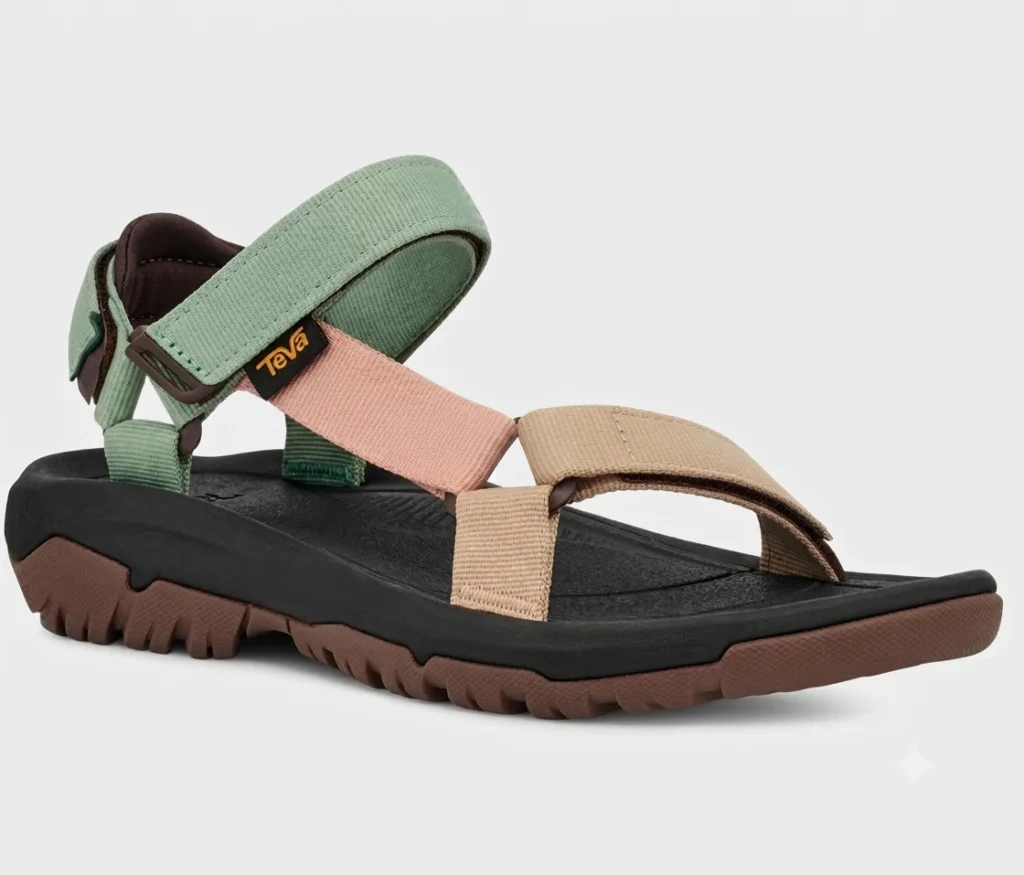
Overview: The Hurricane XLT2 is the sandal most hikers picture when they think “hiking sandal,” and for good reason. It updates Teva’s classic Universal silhouette with a thicker EVA midsole and a nylon shank for extra stability on uneven ground.
Pros:
- Quick-dry recycled polyester straps
- Hook-and-loop closures make on/off and fit adjustments fast
- Noticeably more cushioned than Teva’s original Universal sandal
- Nylon shank adds torsional support on uneven trail
Cons:
- Lug pattern isn’t the grippiest on wet, muddy banks
- Open-toe design offers no protection from stubbed toes
- Plastic strap connectors are a possible wear point over years of use
Key Features: EVA-foam midsole, nylon shank for stability, hook-and-loop straps made from recycled REPREVE polyester, odor-control treatment.
Best For: Day hikers and travelers who want one do-it-all sandal for moderate trails, town, and casual water crossings.
Why We Recommend It: It’s the rare sandal that genuinely splits the difference between a supportive shoe and a breathable sandal, which is why outdoor reviewers consistently name it a top pick for warm-weather trails.
Final Verdict: A dependable, well-rounded choice if you only want to own one hiking sandal.
This article contains affiliate links. We may earn a commission if you make a purchase through our links, at no additional cost to you.
2. KEEN Newport H2 — Best Closed-Toe Hiking Sandal
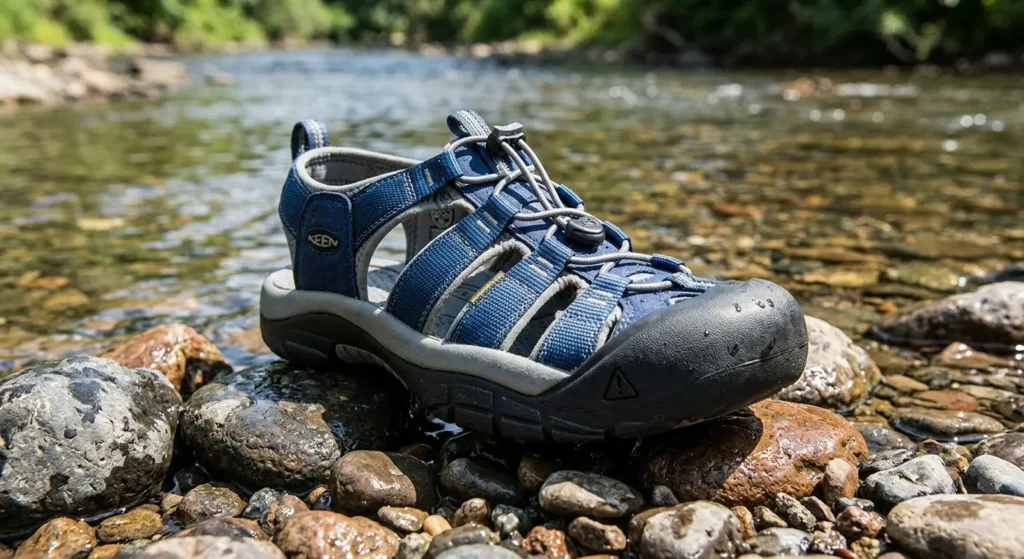
Overview: If you’ve ever stubbed a toe on a root and sworn off open sandals, the Newport H2 is the fix. KEEN’s signature rubber toe bumper wraps up and over the front of the foot, so you get sandal breathability with real toe protection.
Pros:
- Patented toe bumper protects against rocks and roots
- Roomy, women-specific toe box fits wider feet comfortably
- Bungee lace-lock system gives a quick, secure, adjustable fit
- Multi-directional siped lugs handle wet rock well
Cons:
- Runs on the heavier side compared to open-strap sandals
- Takes longer than average to fully dry after a soak
- Higher price point than most sandals on this list
Key Features: EVA midsole with arch-support insole, washable polyester webbing, non-marking rubber outsole, roughly $130 MSRP.
Best For: Hikers on rocky or root-covered trails, water crossings, and anyone who wants closed-toe hiking sandals for women without the weight of a full shoe.
Why We Recommend It: It’s consistently rated one of the most protective hiking sandals on the market, and the wider fit works well for hikers who find other brands too narrow.
Final Verdict: The best pick if toe protection is non-negotiable for your trails.
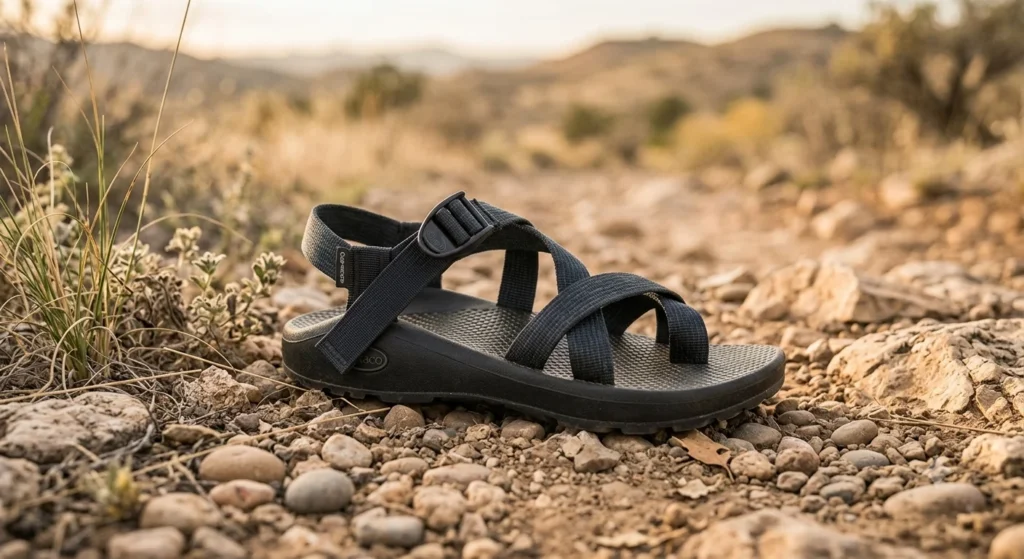
3. Chaco Z/Cloud 2 — Best for Arch Support
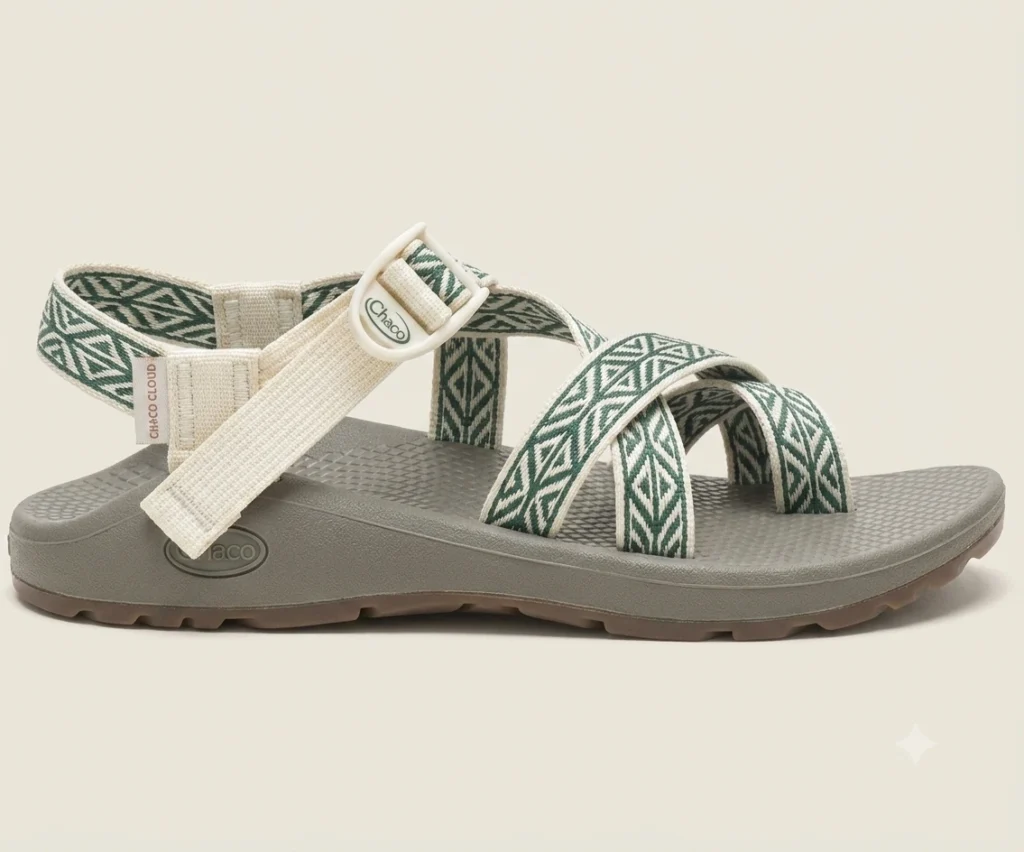
Overview: Chaco built its reputation on adjustable straps and serious arch support, and the Z/Cloud 2 adds a soft polyurethane top layer over that same podiatrist-certified LUVSEAT footbed for extra plushness underfoot.
Pros:
- LUVSEAT footbed is APMA-accepted and shaped specifically for a women’s foot
- 360-degree Z-strap adjustability lets you dial in a custom fit
- ChacoGrip rubber outsole grips well on wet and dry surfaces
- Backed by Chaco’s re-soling and repair program
Cons:
- Bulkier and heavier than most sandals on this list
- High arch shape can feel too aggressive if you have flat feet
- Strap system has a learning curve for first-time Chaco wearers
Key Features: LUVSEAT contoured arch support, 5mm cushioned PU top layer, jacquard webbing straps, non-marking ChacoGrip outsole.
Best For: Hikers with moderate-to-high arches who want serious support for all-day wear, river guiding, or long travel days on foot.
Why We Recommend It: It’s one of the few sandals with an orthotic-grade footbed built in, which matters if arch pain has cut hikes short before.
Final Verdict: The strongest arch support on this list, with a break-in period to match.
4. Muboliy Women’s Hiking Sport Sandals — Best Budget Pick
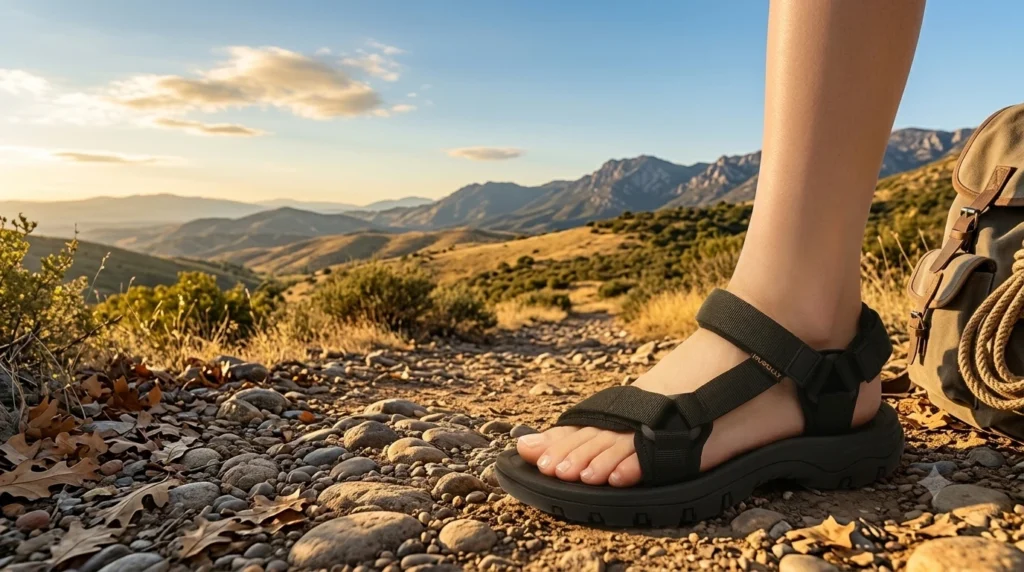
Overview: Muboliy’s hiking sandals bring several premium-sandal ideas — an EVA “yoga mat” midsole, adjustable woven Velcro straps, and a built-in arch support shape — to a fraction of the price of the big outdoor brands.
Pros:
- Noticeably lower price than brand-name hiking sandals
- Cushioned EVA midsole and padded tricot lining feel soft out of the box
- Adjustable straps at the front and ankle for a more custom fit
- Suitable for hiking, camping, kayaking, and general water sports
Cons:
- Rubber outsole isn’t tested to the same durability standard as premium brands
- Fewer size and width options than established outdoor brands
- Less brand history and long-term durability data available
Key Features: EVA yoga-mat-style midsole, adjustable woven Velcro straps, rubber outsole, padded heel and tricot lining.
Best For: Budget-conscious hikers, casual trail walkers, and anyone who wants to try a hiking sandal before investing in a premium pair.
Why We Recommend It: It hits the core features people search for — arch support, quick-dry material, adjustable straps — at an entry-level price.
Final Verdict: A solid starter pair, especially for occasional hikers rather than daily trail runners.
5. Skechers Arch Fit Reggae Sport – Gotta Go — Best for Plantar Fasciitis
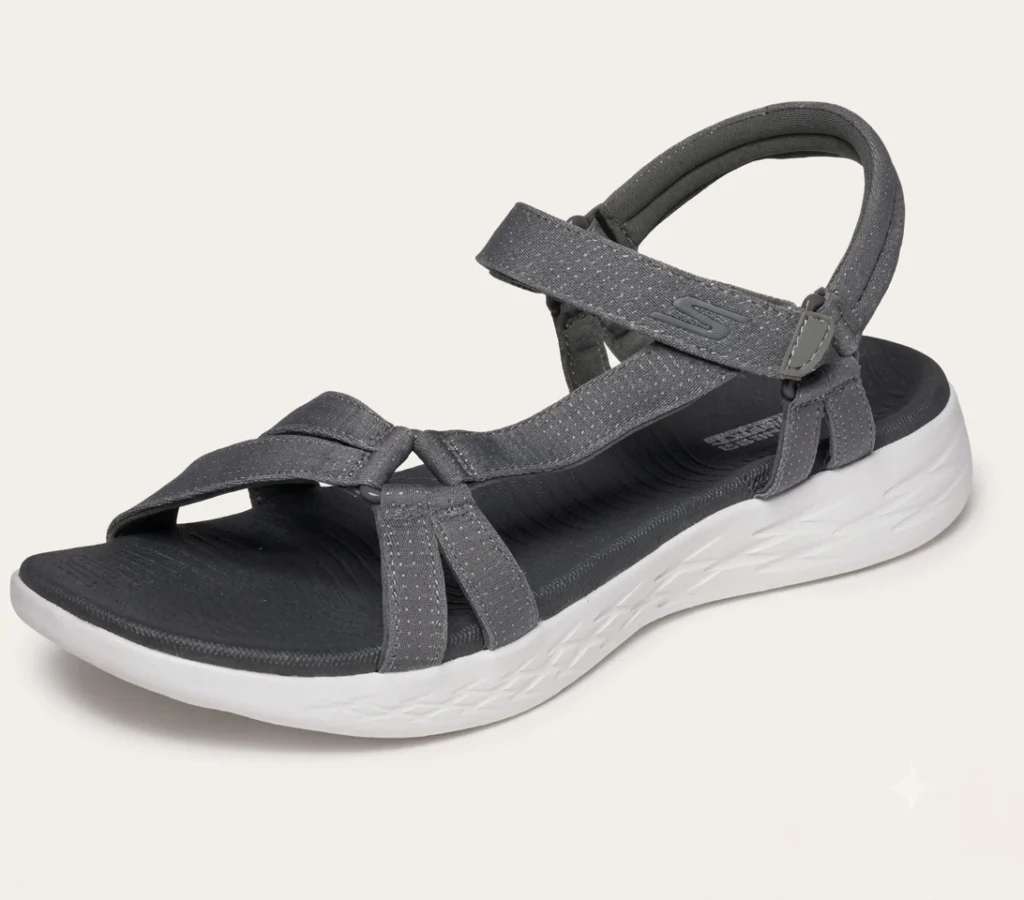
Overview: This isn’t a rugged trail sandal, but for hikers dealing with heel and arch pain, it may matter more than traction lugs. Skechers built its patented Arch Fit insole using data from more than 120,000 foot scans, and the design has earned the APMA Seal of Acceptance.
Pros:
- APMA Seal of Acceptance for podiatrist-certified arch support
- Removable, contoured insole molds to the shape of your foot
- Soft knit and synthetic upper with an adjustable instep strap
- Noticeably lighter than most technical hiking sandals
Cons:
- Not designed for water crossings or technical, rocky terrain
- Traction is aimed at pavement and easy trail, not scrambling
- Less durable strap hardware than dedicated outdoor brands
Key Features: Patented Arch Fit contoured footbed, Stretch Fit knit upper, adjustable instep strap, roughly $60 retail price.
Best For: Hikers who need serious arch and heel support for flat, well-maintained trails, travel, or everyday wear alongside occasional hikes.
Why We Recommend It: It’s one of the only sandals on this list built specifically around podiatric research rather than trail performance, which makes it a strong pick if plantar fasciitis is your main concern.
Final Verdict: Excellent comfort for foot pain, but pair it with a more rugged sandal for technical trails.
6. Merrell Terran 4 Post Wrap — Best Everyday-to-Trail Sandal
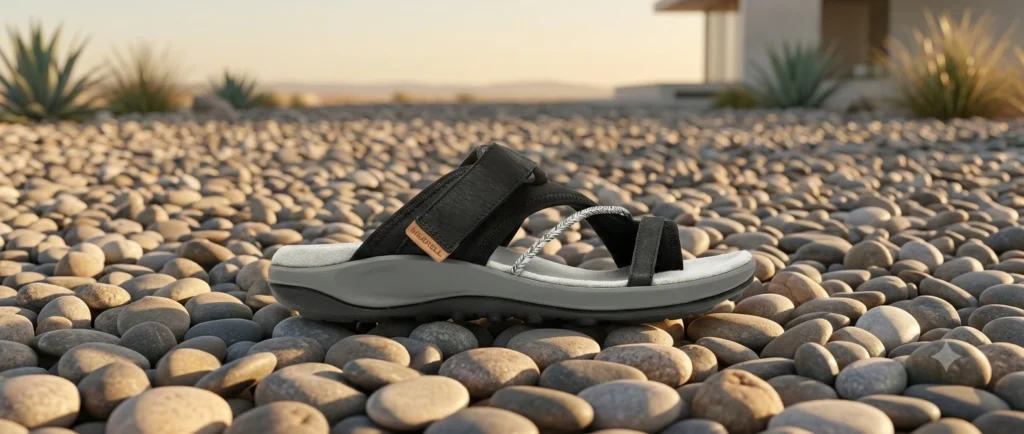
Overview: The Terran 4 collection is Merrell’s current lightweight sandal lineup, built for the trail-to-town crowd rather than technical scrambling. The Post Wrap style uses adjustable straps and a plush footbed foam to keep long walking days comfortable.
Pros:
- Very easy on and off, thanks to a simple adjustable strap design
- Super Rebound Compound midsole gives a bouncier, less fatiguing step
- Lightweight compared to bulkier adventure sandals
- Merrell’s trail-shoe DNA shows in the rubber outsole’s grip
Cons:
- Not rated for serious water crossings or heavy stream use
- Less structured arch support than Chaco or KEEN
- Best suited to easy-to-moderate terrain, not technical trails
Key Features: Super Rebound Compound midsole, adjustable straps, rubber traction outsole, plush footbed foam.
Best For: Hikers who want a sandal that transitions from an easy day hike to dinner in town without missing a beat.
Why We Recommend It: Merrell’s trail-shoe cushioning technology gives this sandal a noticeably softer step than most sport sandals in its price range.
Final Verdict: A comfortable, versatile everyday sandal that can handle mellow trails.
7. Columbia Konos Hiker 2-Strap Sandal — Best Traction
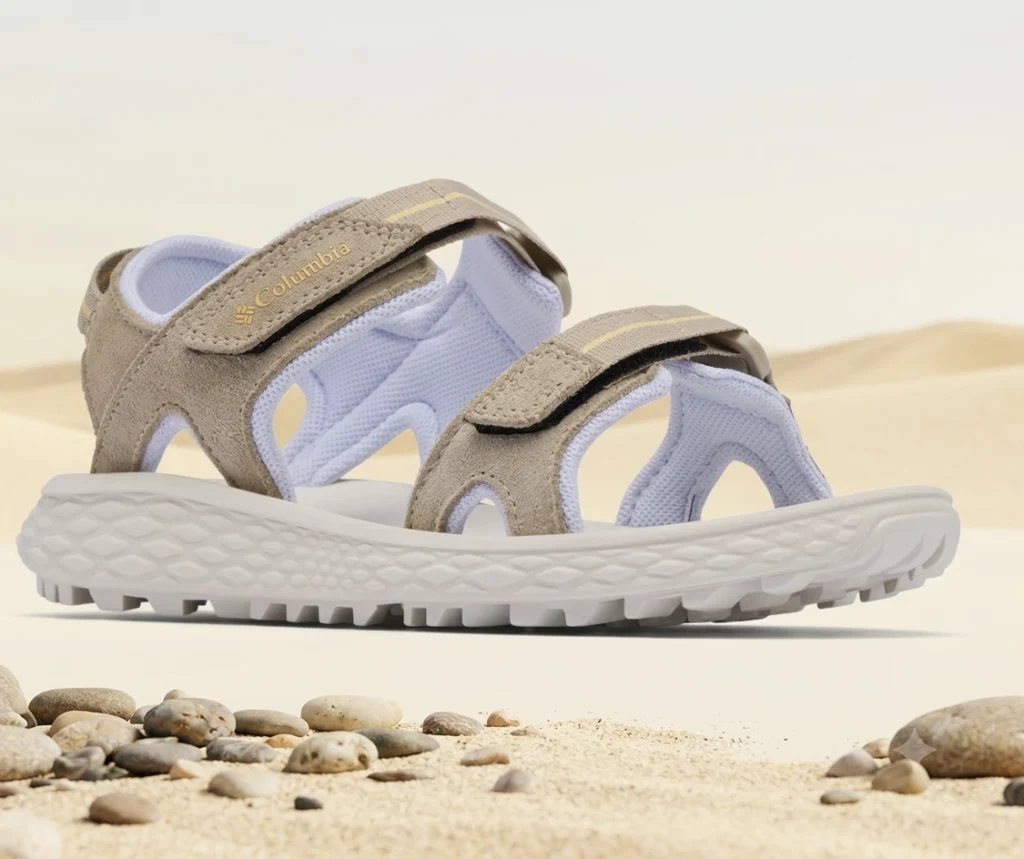
Overview: Columbia brought its Omni-Grip outsole technology, normally found on hiking boots, down into a two-strap sandal. The result is a sandal built around traction and stability first, comfort second.
Pros:
- Omni-Grip non-marking outsole is built specifically for wet-or-dry traction
- TechLite midsole-and-frame combo adds underfoot stability
- Hydrophobic webbing straps resist soaking through
- Simple two-strap design is fast to adjust
Cons:
- Footbed cushioning is firmer than plush comfort sandals like Skechers Arch Fit
- Sizing runs slightly differently across Columbia’s various sandal lines
- Fewer strap adjustment points than Chaco’s Z-strap system
Key Features: Omni-Grip rubber outsole with hike-specific tread, TechLite cushioned midsole and frame, hydrophobic webbing, adjustable bungee heel.
Best For: Hikers who prioritize grip on slick river rock and uneven trail surfaces over plush cushioning.
Why We Recommend It: The Omni-Grip outsole is genuinely one of the more slip-resistant tread patterns available on a sandal in this price range.
Final Verdict: A traction-first sandal that’s a great match for stream crossings and rocky terrain.
8. Chaco Z/1 Classic — Best Minimalist & Most Durable
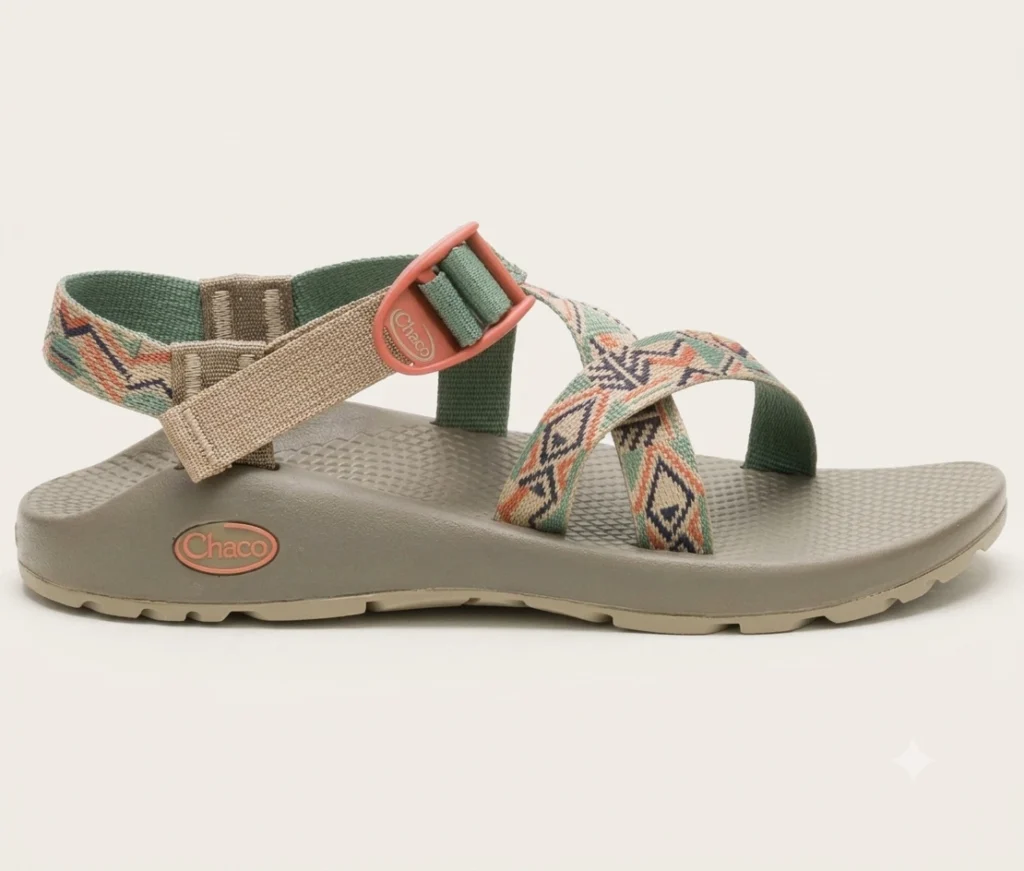
Overview: The Z/1 Classic strips Chaco’s design down to just eight parts: a single continuous strap, a footbed, and an outsole. It’s the sandal river guides have relied on for over three decades, and it’s built to be resoled rather than replaced.
Pros:
- Only eight component parts means less to break or wear out
- Continuous pull-through strap allows nearly unlimited fit adjustment
- Podiatrist-certified LUVSEAT footbed still delivers real arch support
- Fully re-soleable through Chaco’s repair program
Cons:
- Open-toe, open-heel design offers no toe protection
- Strap adjustment takes practice to get an even, comfortable fit
- Thinner sole than the Z/Cloud line means less cushioning underfoot
Key Features: LUVSEAT arch-support footbed, continuous 3/4-inch polyester webbing strap, ChacoGrip outsole, resoleable construction.
Best For: Long-term durability seekers, river guides, and hikers who want a repairable, minimalist sandal that lasts for years.
Why We Recommend It: Reviewers consistently mention wearing the same pair for 5–10+ years, which makes the higher upfront cost easier to justify.
Final Verdict: Buy it once and resole it for years — a genuinely long-term investment.
9. Bedrock Cairn Evo — Best for Backpacking
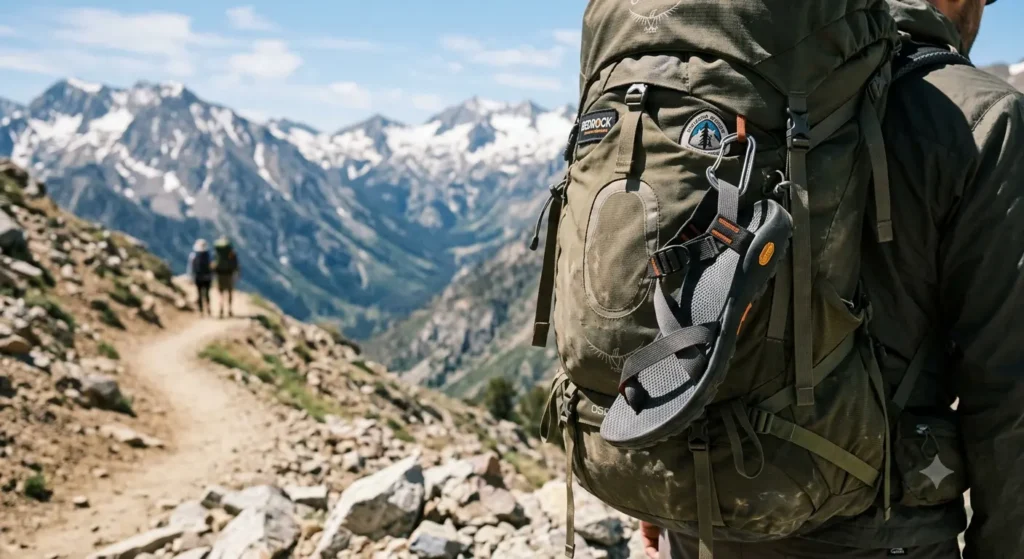
Overview: Bedrock’s Cairn Evo is a minimalist, zero-drop sandal built for hikers who want to feel the trail underfoot without sacrificing security. At roughly 14.1 ounces per pair, it’s light enough to carry as a camp shoe on a thru-hike, yet secure enough to hike serious miles in.
Pros:
- Extremely lightweight for a technical adventure sandal
- Vibram outsole delivers strong grip and durability
- Secure Y-strap system holds the foot in place during scrambles
- Fits well for wider feet, according to updated sizing
Cons:
- Zero-drop, minimalist footbed means very little built-in arch support
- Straps need readjusting between activities to avoid pressure points
- Pricier than most sandals aimed at casual hikers
Key Features: Zero-drop 14mm stack height, Vibram outsole, adjustable Y-strap harness, minimalist EVA footbed.
Best For: Backpackers and thru-hikers who want an ultralight camp shoe capable of handling real trail miles.
Why We Recommend It: Long-distance hikers have used these on multi-week trips like sections of the Pacific Crest Trail, which says a lot about their durability-to-weight ratio.
Final Verdict: The lightest true hiking sandal here, best for minimalist-footwear fans and thru-hikers.
10. Vionic Tide II Toe Post — Best for Foot Pain & Everyday Comfort
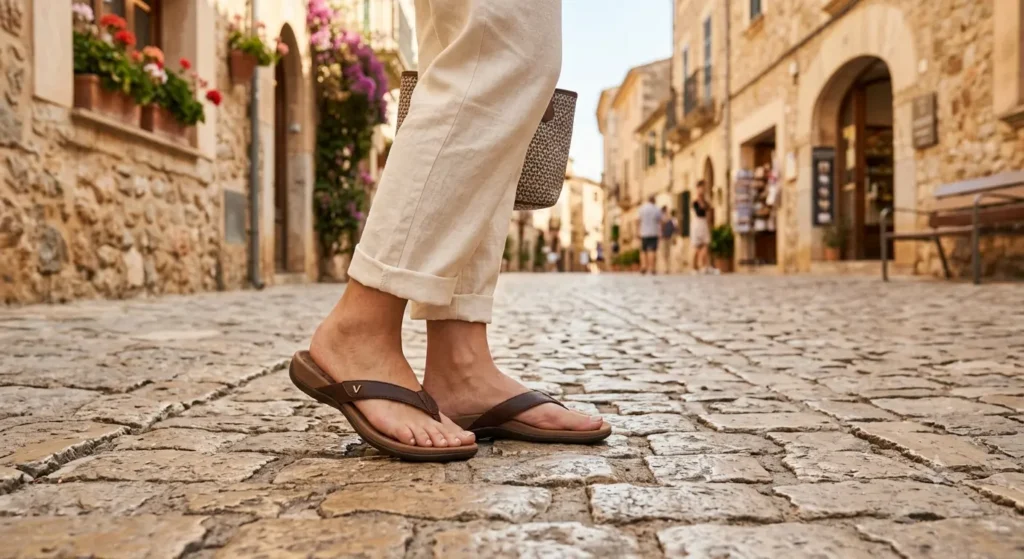
Overview: The Tide II isn’t marketed as a technical hiking sandal, but it earns a spot here for hikers whose limiting factor is foot pain, not trail difficulty. It was the first sandal built around a true orthotic footbed, and it carries the APMA Seal of Acceptance for heel pain relief.
Pros:
- Built-in orthotic shown in a peer-reviewed study to help with heel pain
- Lightweight, flexible EVA midsole absorbs shock on pavement and easy trail
- Durable TPR outsole with a patterned tread for extra grip
- Comfortable enough for genuine all-day, everyday wear
Cons:
- Not designed for water crossings, mud, or technical terrain
- Less aggressive traction than dedicated outdoor brands
- Best treated as a travel and easy-trail sandal, not a backcountry one
Key Features: VIO MOTION orthotic footbed, medium-density EVA midsole, durable TPR outsole, APMA Seal of Acceptance.
Best For: Hikers managing plantar fasciitis or general foot fatigue who need serious arch support for travel days and easy trails.
Why We Recommend It: It’s one of the few sandals on this list backed by a clinical study on heel pain relief rather than marketing copy alone.
Final Verdict: Not a trail sandal in the traditional sense, but a genuine comfort upgrade for painful feet.
11. CIOR Women’s Sport Sandals — Best Value for Wide Feet
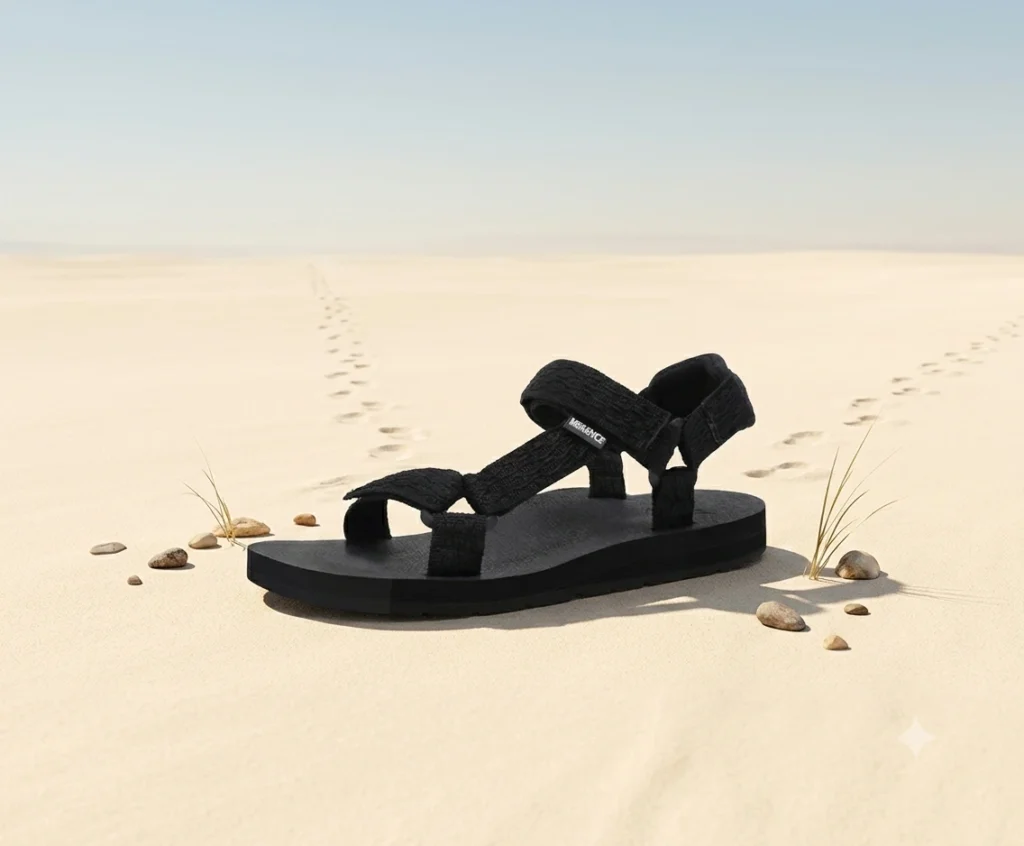
Overview: CIOR’s sport sandals are another Amazon-first option that packs in arch support, an EVA “yoga mat” insole, and adjustable straps at a low price point. The roomier footbed shape tends to work well for wider feet.
Pros:
- Very affordable compared to name-brand hiking sandals
- EVA yoga-mat insole with textured grip and built-in arch support
- Two hook-and-loop closures for an adjustable fit
- Padded heel straps reduce chafing on longer walks
Cons:
- Outsole traction isn’t tested to technical-trail standards
- Long-term durability data is limited compared to established brands
- Sizing can run inconsistent between color and style options
Key Features: EVA yoga-mat footbed with arch support, adjustable hook-and-loop straps, skid-resistant MD/TPR outsole, padded heel straps.
Best For: Budget shoppers and wide-footed hikers who want a roomier fit without paying premium-brand prices.
Why We Recommend It: Between the wider footbed and the adjustable double-strap closure, it’s a comfortable low-cost option for casual trails and travel.
Final Verdict: A budget pick worth considering if standard sandal widths feel tight on your feet.
Buying Guide: How to Choose the Right Hiking Sandal
Arch Support
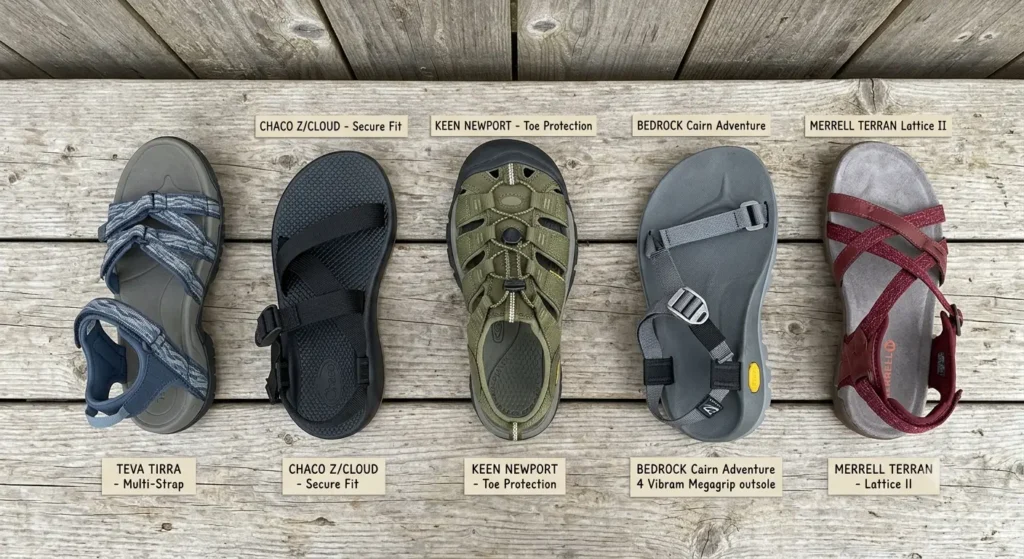
Arch support is the single biggest comfort factor on long hikes. Sandals with a contoured, molded footbed (like Chaco’s LUVSEAT or Skechers’ Arch Fit) cradle the arch and reduce fatigue, which matters most if you already deal with foot pain, over-pronation, or flat feet. If you’re shopping specifically for hiking sandals with arch support, look for a footbed described as “contoured,” “orthotic,” or “podiatrist-certified” rather than a flat EVA slab.
Cushioning and Footbed
Cushioning affects how a sandal feels underfoot on pavement, gravel, and packed dirt. EVA foam is the most common midsole material because it’s light and absorbs shock well, but it compresses over time. Sandals with a firmer support frame around a softer EVA core (like Columbia’s TechLite) tend to hold their shape longer than an all-soft EVA build.
Outsole Grip and Tread Pattern
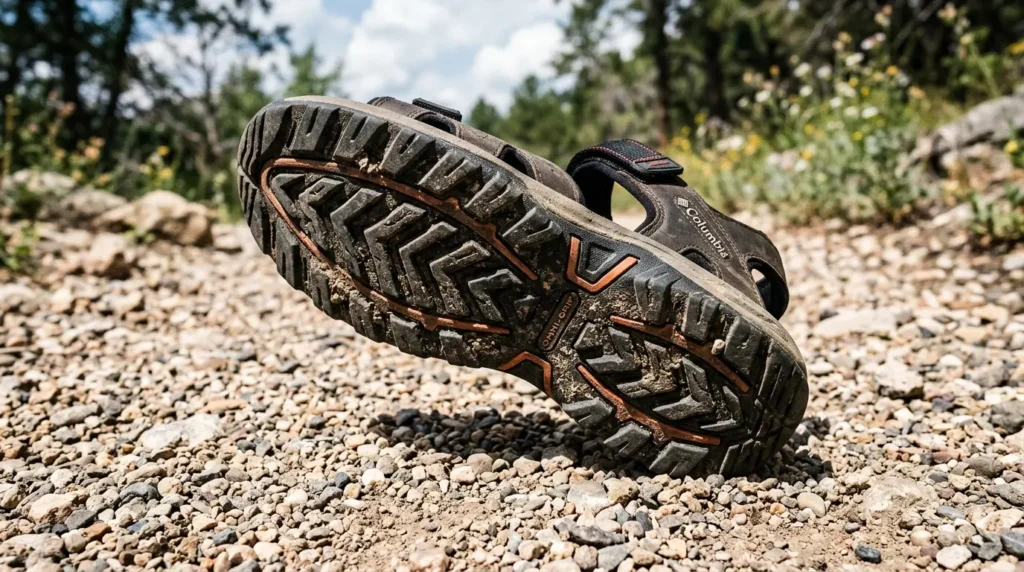
Look at the lug depth and pattern, not just the brand name. Deeper, multi-directional lugs with siping (small grooves that channel water away) grip wet rock far better than a flat or shallow tread. If your hikes involve stream crossings or slick trail after rain, prioritize this over cushioning.
Quick-Drying Materials
Polyester webbing dries far faster than cotton or leather. If you’re specifically looking for quick-drying hiking sandals, check that both the strap material and the footbed lining are labeled quick-dry, since a fast-drying strap paired with a slow-drying foam insole still leaves you squishing around camp.
Toe Protection: Open Toe vs. Closed Toe
Open-toe sandals breathe better and feel lighter, but they leave your toes exposed on rocky or root-covered trails. Closed-toe hiking sandals for women, like the KEEN Newport H2, add a rubber toe bumper that meaningfully cuts down on stubbed toes without sacrificing much airflow. If your trails are technical, this is worth the small weight trade-off.
Hiking Terrain, Fit, and Sizing
Match the sandal to your terrain: minimalist, thin-soled sandals feel great on smooth trail but transmit every rock on technical ground, while thicker-soled sandals protect your feet at the cost of some trail feel. Sandals should fit snugly at the heel with no more than a thumb’s width of extra room at the toe. Not sure how snug is too snug? Our guide on how tight trail shoes should be applies to sandals too — you want secure, not restrictive.
Weight, Durability, and Adjustable Straps
Heavier sandals are usually built with more structure and last longer; lighter sandals are more comfortable to carry as a backup pair but may wear out faster. Multiple points of strap adjustability (front, ankle, and heel) let you fine-tune fit around swelling feet on hot days, which matters more on a sandal than almost any other piece of hiking gear.
Hiking Sandals vs. Other Footwear: What’s the Difference?
Hiking Sandals vs. Hiking Shoes
Hiking shoes protect your whole foot and can be built waterproof, which matters on cold or muddy trails. Sandals trade that protection for breathability and faster drying. If you’re weighing the two, our comparison of the best waterproof hiking shoes for women is a useful next stop, especially for cooler-weather trips where sandals aren’t the right call.
Hiking Sandals vs. Water Sandals
Basic water sandals (think beach or river slides) are built for softer, sandy terrain and short splashes, not miles of trail. Hiking sandals add a structured, arch-supportive footbed and a grippier, more durable outsole so they can handle rocky and uneven ground without your foot rolling around inside the shoe.
Hiking Sandals vs. Trail Runners
Trail runners offer more support, better protection from debris, and typically more cushioning for high-mileage days, but they trap heat and take far longer to dry after a water crossing. Many hikers carry both: trail runners or waterproof hiking shoes for the trail itself, and a lightweight hiking sandal as a camp shoe or town shoe.
How to Care for Your Hiking Sandals
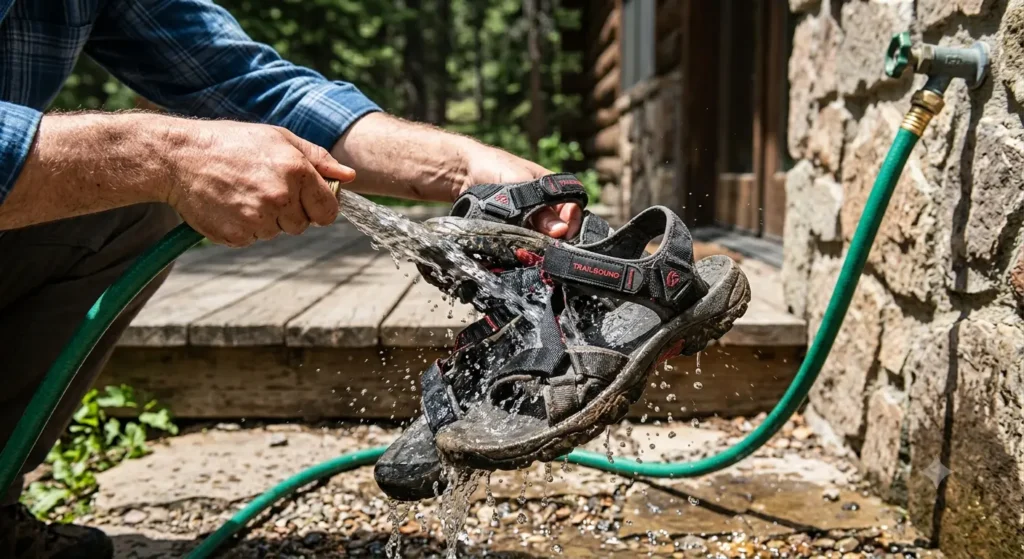
- Cleaning: Rinse straps and footbeds with cool water after muddy or salty trips, and use a soft brush with a small amount of mild soap on stubborn grime. Many synthetic sandals, including several on this list, are machine washable on a gentle cycle.
- Drying: Air dry sandals out of direct sunlight, which can dry out and crack synthetic webbing and rubber over time. Never dry them on or near a direct heat source.
- Odor Prevention: Let sandals fully air out between wears rather than stuffing them straight into a pack, and consider an odor-control spray if you’re on a multi-day trip without laundry access.
- Storage: Store sandals somewhere cool and dry, away from prolonged direct sun, which breaks down foam midsoles and webbing faster than normal wear does.
- Extending Lifespan: Rinse sand and grit out of strap buckles regularly, since trapped grit is one of the most common causes of premature strap wear. Brands like Chaco and Bedrock also offer resoling programs that can double a sandal’s usable life.
Common Mistakes to Avoid When Buying Hiking Sandals
- Buying the wrong size. Feet swell on hot, long hikes, so sizing up slightly (or choosing a sandal with generous strap adjustability) usually beats sizing exactly to your street-shoe measurement.
- Ignoring arch support. A flat, unsupportive footbed might feel fine on a five-minute walk in the store and terrible five miles into a trail.
- Choosing fashion over function. A sandal that looks great with shorts isn’t automatically built for uneven terrain — check the outsole and footbed, not just the strap pattern.
- Using beach or fashion sandals on real trails. Thin, flat-soled beach sandals offer little protection from roots, rocks, or loose gravel and can lead to rolled ankles.
- Skipping the break-in period. Even well-fitting straps can rub during the first few wears; break new sandals in around town before a long hike.
- Overlooking toe protection needs. If your trails are rocky, an open-toe sandal that looked fine online can lead to real injuries on the trail.
Frequently Asked Questions
What are the best women’s hiking sandals for long walks?
For long walks, prioritize sandals with structured arch support and cushioning, like the Chaco Z/Cloud 2 or Skechers Arch Fit Reggae Sport. Both are designed to reduce fatigue over hours on your feet rather than just short strolls.
Are hiking sandals good for rocky trails?
Yes, as long as you choose one with a grippy, multi-directional outsole and ideally some toe protection. Closed-toe options like the KEEN Newport H2 handle rocky trails more comfortably than fully open-toe designs.
Which hiking sandals have the best arch support?
Chaco’s LUVSEAT footbed and Skechers’ Arch Fit insole are both podiatrist-certified and consistently rated among the most supportive options for hiking sandals with arch support.
Can you wear hiking sandals in national parks?
Yes, sandals are allowed on most maintained trails in national parks, but check individual trail difficulty ratings first. Steep, rocky, or exposed routes are safer in closed-toe hiking shoes, so match your footwear to the specific trail rather than assuming sandals work everywhere.
Are hiking sandals better than hiking shoes?
Neither is universally “better” — sandals win on breathability, quick-drying, and comfort in hot weather, while shoes win on protection, support, and cold- or wet-weather performance. Many hikers own both and choose based on trail and season.
Which hiking sandals dry the fastest?
Sandals with polyester webbing straps and minimal padding, like the Teva Hurricane XLT2 or Chaco Z/1 Classic, dry faster than padded, closed-toe designs like the KEEN Newport H2, which trap more water in the lining.
What hiking sandals are best for wide feet?
KEEN’s women-specific last is built wider than the industry average, and budget options like CIOR tend to run roomier too. If you regularly need wide toe box shoes in sneakers, look for the same “wide” or “roomy forefoot” language in sandal descriptions.
Can hiking sandals be used for water crossings?
Yes — most sandals on this list, aside from the comfort-focused Skechers and Vionic picks, are built with quick-dry materials specifically for water crossings, kayaking, and creek walking.
Are hiking sandals good for plantar fasciitis?
The right pair can help. Look for an APMA-accepted footbed, like Skechers’ Arch Fit or Vionic’s VIO MOTION technology, both of which are built around clinical arch-support research rather than general cushioning.
Which hiking sandals are most comfortable for all-day wear?
The Chaco Z/Cloud 2, Skechers Arch Fit Reggae Sport, and Vionic Tide II all stand out for all-day comfort thanks to their structured, supportive footbeds.
How should hiking sandals fit?
Your heel should sit snugly in the heel cup with minimal slipping, and there should be no more than a thumb’s width of space beyond your longest toe. Straps should feel secure but shouldn’t dig into the top of your foot or between your toes.
Do hiking sandals provide enough grip?
It depends entirely on the outsole. Sandals with deep, siped, multi-directional lugs — like the Columbia Konos Hiker or KEEN Newport H2 — grip wet rock and uneven ground far better than flat-soled, fashion-oriented sandals.
Are hiking sandals suitable for backpacking?
Yes, especially lightweight, durable models like the Bedrock Cairn Evo, which backpackers use both as a trail shoe and an ultralight camp shoe on multi-day trips.
Which hiking sandals last the longest?
Chaco’s Z/1 Classic and Z/Cloud lines are widely known for multi-year durability, partly because Chaco offers a resoling program that extends a sandal’s life well beyond the original outsole.
Can I hike 10 miles in hiking sandals?
Many hikers do, but success depends on your sandal’s arch support and your feet’s tolerance for open footwear over distance. Start with shorter hikes to test fit and comfort before committing to a full-day, high-mileage trip.
What are the best hiking sandals for travel?
Lightweight, versatile options like the Merrell Terran 4 Post Wrap or Teva Hurricane XLT2 work well for travel since they transition easily from walking tours to casual dinners. If you’re comparing them to sneakers for a trip, see our guide to the best women’s walking shoes for travel in Europe.
Are hiking sandals good for hot weather?
Yes — breathability is one of the biggest advantages sandals have over closed shoes in the heat. Pair them with the rest of a summer hiking outfit designed to keep you cool on the trail.
Should I wear socks with hiking sandals?
Most hikers skip socks with sandals, but in cooler mornings or on multi-day trips, a thin moisture-wicking sock can reduce chafing. If you do wear socks, choose lightweight summer hiking socks rather than heavier trail socks built for boots.
Final Thoughts
There’s no single “best” hiking sandal for every hiker — the right pick depends on your terrain, your feet, and how much support you need. If you want one dependable, do-it-all sandal, the Teva Hurricane XLT2 is hard to beat. If rocky trails and stubbed toes are a real concern, go with the KEEN Newport H2. And if arch pain has cut hikes short before, the Chaco Z/Cloud 2 or Skechers Arch Fit Reggae Sport are worth the investment.
Whichever pair you choose, break it in before a long trail day, and check the fit against your actual hiking terrain — not just how it looks with shorts. For more on building out your kit, check our full hiking packing list and guide to what to wear hiking.
Product disclaimer: Recommendations in this article are based on manufacturer specifications, publicly available customer reviews, and comparative research rather than firsthand wear-testing of every product listed. Prices, availability, and specific models may change — always check the current listing on Amazon before purchasing.