Table of Contents
You’re standing in the footwear aisle — or scrolling at midnight — trying to decide between waterproof vs non waterproof hiking shoes. One pair promises dry feet in rain, the other promises better breathability and comfort on long hikes. Both look good, but only one is right for your conditions.
This guide will help you quickly understand the real difference so you can choose the best option without confusion.
Here’s the thing: this is actually one of the easier gear decisions once you know what to look for. The “right” answer depends almost entirely on where you hike and when. This guide cuts through the noise and gives you a straight answer — plus some trail-tested picks that real hikers love.
What’s the Difference Between Waterproof vs Non Waterproof Hiking Shoes?
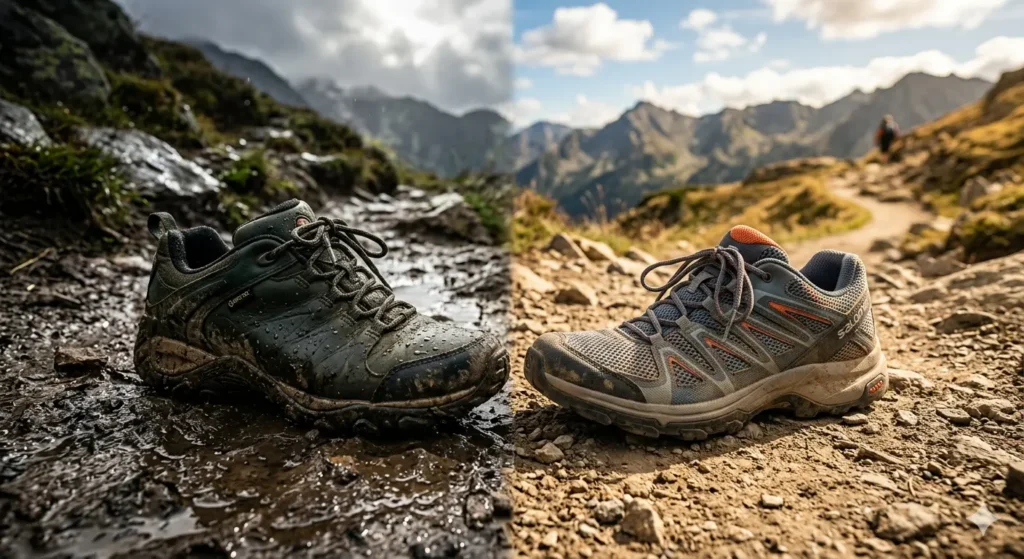
The core difference comes down to one thing: whether the shoe has a waterproof membrane sandwiched inside the upper material. The most well-known membrane is Gore-Tex, though brands like Salomon use their own version, Merrell uses M Select DRY, and Oboz runs BDry. These membranes are designed to block water from getting in while still allowing some moisture vapor to escape.
Non-waterproof shoes skip that internal membrane. Instead, they use open-weave mesh uppers that breathe freely. Water goes in just as easily as it goes out — which sounds bad until you realize your feet sweat a lot, and that sweat has nowhere to go in a waterproof shoe.
How waterproof membranes work (in plain English)
Think of a Gore-Tex liner as a microscopic filter. Its pores are small enough to block liquid water droplets from outside, but large enough to let water vapor (sweat) escape from inside. The technology works — up to a point. Once the shoe is submerged or heavily saturated, water eventually gets in through the collar anyway. And once wet, waterproof shoes take significantly longer to dry than mesh ones.
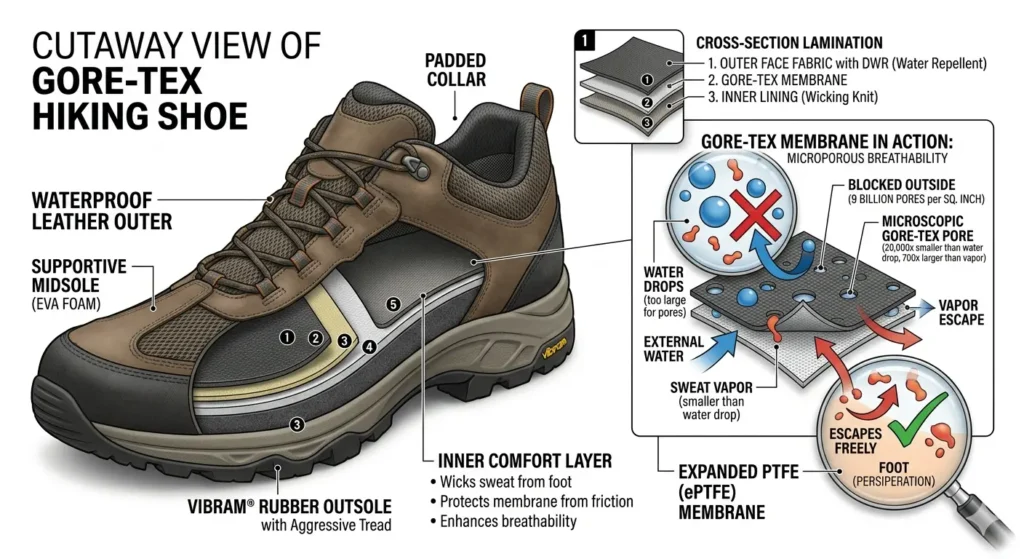
Waterproof vs Non Waterproof Hiking Shoes: Pros & Cons (Waterproof Side)
Pros
- Feet stay dry crossing shallow streams and puddles
- Excellent in cold, wet, or snowy conditions
- Great for early morning hikes with heavy dew
- Warmer in winter months
- Protect against mud and grit saturation
Cons
- Much less breathable — feet get hot and sweaty
- Heavier due to the extra membrane layer
- Significantly slower to dry once wet inside
- Blisters more likely in warm weather (trapped moisture)
- Usually $20–$50 more expensive
The breathability gap is the big one. If you’re hiking 8–10 miles on a warm summer day, your feet will sweat. A lot. In a waterproof shoe, that sweat has nowhere to go, and you end up with wet feet from the inside rather than the outside. That’s actually worse, because it increases friction and blister risk.
Waterproof vs Non Waterproof Hiking Shoes: Pros & Cons (Non-Waterproof Side)
Pros
- Far more breathable — feet stay cooler and drier from sweat
- Lighter overall weight
- Dry out very quickly after getting wet
- Fewer blisters in warm conditions
- Usually more affordable
Cons
- Feet get wet immediately in rain or puddles
- Not suitable for cold or snowy hiking
- Grit and sand can enter through mesh
- Less protection in wet stream crossings
Here’s what most guides won’t tell you: on a dry summer trail, mesh hiking shoes will actually give you drier feet than waterproof ones. Your feet stay cooler, sweat evaporates freely, and the overall comfort level is dramatically higher. The trade-off only kicks in when you hit actual water — rain, puddles, stream crossings.
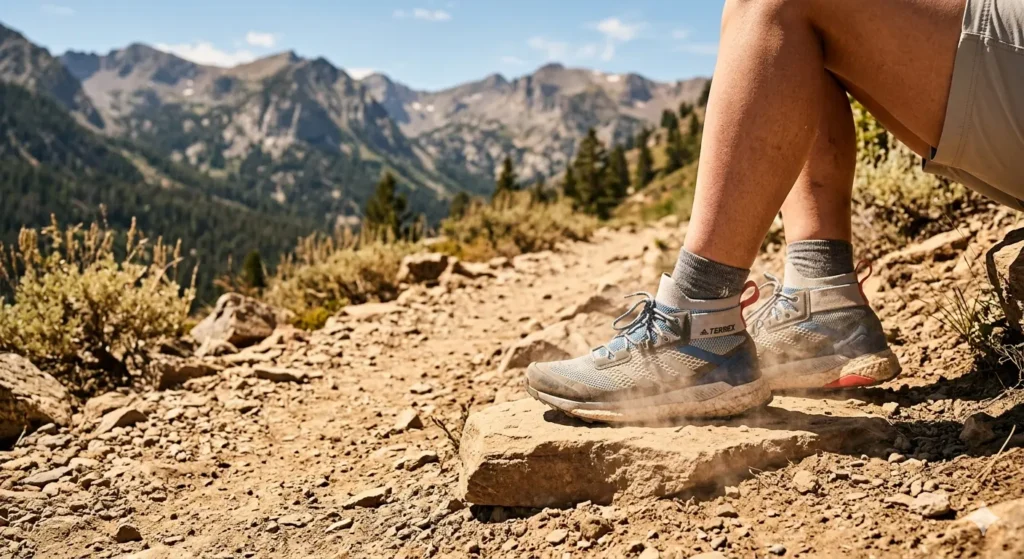
Side-by-Side Comparison Table
| Feature | Waterproof Hiking Shoes | Non-Waterproof Hiking Shoes |
|---|---|---|
| Water protection | High (up to a point) | None — gets wet immediately |
| Breathability | Low to moderate | Very high |
| Drying time | Slow (hours to days) | Fast (30–60 min) |
| Weight | Heavier | Lighter |
| Warmth | Warmer | Cooler |
| Best season | Fall, winter, wet spring | Spring, summer, dry weather |
| Best terrain | Muddy, snowy, dewy trails | Dry, rocky, well-maintained trails |
| Blister risk (warm weather) | Higher (trapped moisture) | Lower |
| Price | Usually $20–$50 more | More budget-friendly |
| Best for | Pacific Northwest, rainy regions | Southwest, summer hiking, dry climates |
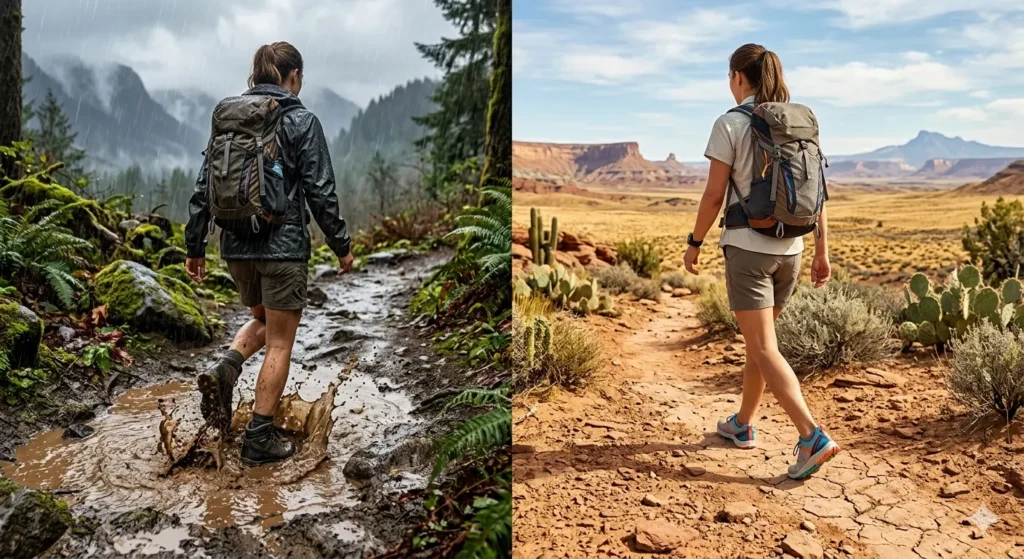
When to Choose Waterproof vs Non Waterproof Hiking Shoes
💧 Choose Waterproof If You…
- Hike in the Pacific Northwest, Northeast, or UK
- Hike in fall, winter, or shoulder season
- Frequently encounter morning dew or wet brush
- Do stream crossings regularly (below ankle depth)
- Hike in snow or slushy conditions
- Prioritize dry feet over breathability
☀️ Choose Non-Waterproof If You…
- Hike in summer or dry, warm climates
- Are in the Southwest, Rockies in summer, or desert
- Do deep water crossings (better to get wet and dry fast)
- Sweat heavily or run hot
- Hike long distances where weight matters
- Are on a tight budget
What about water-resistant shoes?
You’ll see some shoes labeled “water-resistant” rather than “waterproof.” These have a DWR (Durable Water Repellent) coating on the outer fabric — they’ll shrug off light splashes and brief exposure, but they’re not sealed with a membrane. They sit in the middle ground: slightly better breathability than fully waterproof, slightly better protection than plain mesh. Good for unpredictable days where you might get some light rain but not sustained wetness.
Top Picks: Waterproof & Non-Waterproof Hiking Shoes
These are well-established, highly-rated models with thousands of verified Amazon purchases and strong trail reputations. Replace the button links with your affiliate URLs.
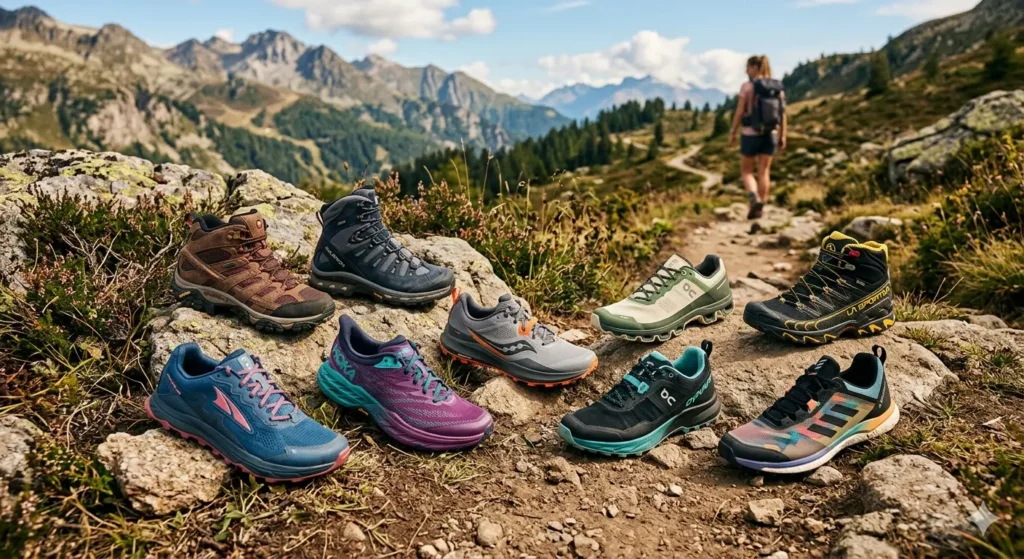
⭐ Best Waterproof Overall
Merrell Moab 3 Waterproof
The Moab 3 has been a top-seller for years and for good reason — it nails the balance between protection, comfort, and durability. The M Select DRY waterproof membrane keeps water out effectively, Vibram TC5+ outsole grips confidently on wet rock, and the Kinetic Fit BASE insole gives enough cushion for half-day hikes without feeling sloppy. Reviewers consistently praise the wide toe box and the fact that it doesn’t need a long break-in period. Runs true to size.
Why hikers love it: “Finally a waterproof boot that doesn’t make my feet feel like they’re in a sauna on mild days.”
🏆 Best Waterproof for Women
Salomon X Ultra 4 GTX (Women’s)
If you want a waterproof shoe that doesn’t feel like a clunky boot, this is it. The Gore-Tex Extended Comfort membrane is one of the more breathable waterproof liners available, and the Contagrip outsole handles technical terrain better than most in this price range. Supportive without being rigid — great for women who need stability on uneven ground without sacrificing agility. Lightweight for a waterproof shoe at around 14 oz. Consistently rated 4.5+ stars across thousands of reviews.
Why hikers love it: “These are the first waterproof hiking shoes I’ve owned that don’t leave me with soaked socks from sweat on a long day.”
💨 Best Non-Waterproof for Breathability
Altra Lone Peak 7
The Lone Peak 7 is beloved by both thru-hikers and day hikers: the foot-shaped toe box gives your toes natural splay, which means less cramping and fewer black toenails on descents. The MaxTrac rubber outsole bites into technical terrain confidently, and the zero-drop platform promotes a more natural stride. The mesh upper is genuinely breathable — your feet will feel the difference on hot days immediately. Gets wet in rain but dries fast, making it the go-to for summer desert hiking and long trail runs. Runs slightly large; size down half a size.
Why hikers love it: “I hiked the Colorado Trail in these. They got wet crossing streams every day and dried within an hour. Wouldn’t touch a waterproof boot again for summer trips.”
💰 Best Budget Non-Waterproof
Merrell Moab 3 (Non-Waterproof)
Same great Moab 3 platform as the waterproof version — same fit, same outsole, same durability — but without the membrane. That means you save money, gain breathability, and lose about half a pound in weight. If you’re hiking in summer or a dry climate, you honestly don’t need the waterproof version, and this one is the smarter buy. The mesh upper dries quickly after stream crossings and sweats far less than its waterproof sibling. The most recommended first hiking shoe for beginners for good reason: it just works.
Why hikers love it: “I had the GTX version and kept getting blisters in summer heat. Switched to the regular mesh and haven’t looked back.”
Frequently Asked Questions
Do waterproof hiking shoes eventually stop being waterproof?
Yes. The outer DWR coating wears off over time with use and washing. You can reapply it with products like Nikwax TX.Direct spray. The Gore-Tex or internal membrane itself lasts much longer — often the life of the shoe — but performance degrades once the outer face fabric gets saturated and stops shedding water.
Are waterproof hiking shoes warmer?
Yes, noticeably so. The membrane traps heat along with moisture. In winter or cold, wet conditions that’s a benefit. In summer, it can make your feet uncomfortably hot, and the trapped sweat actually makes feet feel wetter than they would in breathable mesh.
What if I hike in both wet and dry conditions?
Many experienced hikers own both and swap based on season. If you can only own one pair, consider your primary hiking environment. Dry-climate hikers lean non-waterproof. Hikers in consistently wet areas (Pacific Northwest, UK, Northeast US in spring) usually go waterproof. A DWR-treated water-resistant shoe is a reasonable middle ground for mild, unpredictable conditions.
Can I waterproof non-waterproof hiking shoes?
You can apply a DWR spray like Nikwax Fabric & Leather Proof to add some water repellency. This won’t turn a mesh shoe into a Gore-Tex boot, but it’ll help in light rain or wet brush. Don’t expect deep puddle protection — the mesh weave is too open for that.
Is Gore-Tex the best waterproof membrane?
Gore-Tex is the most recognized name, but it’s not always the best. Merrell’s M Select DRY, Salomon’s own liners, and eVent are all competitive. What matters more is the overall construction quality and how well the brand has integrated the membrane into the specific shoe model.
📌 Related Articles on MyTrailWear
- Best Waterproof Hiking Shoes for Women (Tested & Reviewed)
- Lightweight Waterproof Hiking Boots That Won’t Slow You Down
- Do I Need Waterproof Hiking Shoes? (Honest Answer)
- What to Wear Hiking: Complete Women’s Guide
- Best Women’s Hiking Socks for Summer (Merino vs Synthetic)
- Best Wide Hiking Shoes for Wide Feet
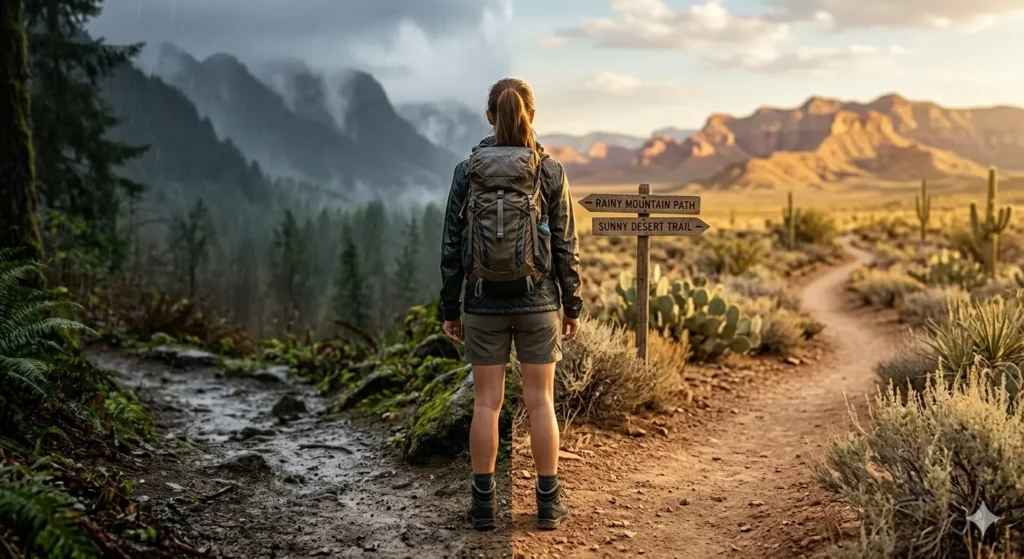
Waterproof vs Non Waterproof Hiking Shoes: Final Verdict
There is no universally “better” option here — it’s a tool for a job. Waterproof hiking shoes are genuinely excellent when conditions call for them: cold weather, wet trails, rain-soaked regions, shoulder season. Non-waterproof mesh shoes win decisively in warm, dry conditions where breathability and quick-drying matter more than a dry first splash.
If you hike mostly in summer, live in a drier climate, or are prone to hot sweaty feet — go mesh. If you hike year-round in wetter regions or hate the feeling of wet feet at any cost, go waterproof. Either way, fit, traction, and cushioning should always come first. The best hiking shoe is the one that fits you well and suits the trail you’re on.
The real secret? Experienced hikers often own one of each. Start with the one that matches your most common hiking conditions — and go from there.
Affiliate disclosure: This post contains Amazon affiliate links. If you purchase through our links, we earn a small commission at no extra cost to you. We only recommend gear we’d genuinely use on the trail.