Quick Answer: Backpacking vs camping is mainly different because backpacking means carrying everything you need on your back and hiking into remote locations, while camping — especially car camping — lets you drive right to your site with as much gear as you want. Backpacking trades comfort for freedom; camping trades adventure for convenience.
Here’s something most people don’t expect: the first time I showed up to a trailhead with a 55-liter pack stuffed to the brim, a fellow hiker took one look at it and said, “That’s a camping pack, not a backpacking pack.” I had no idea there was even a difference.
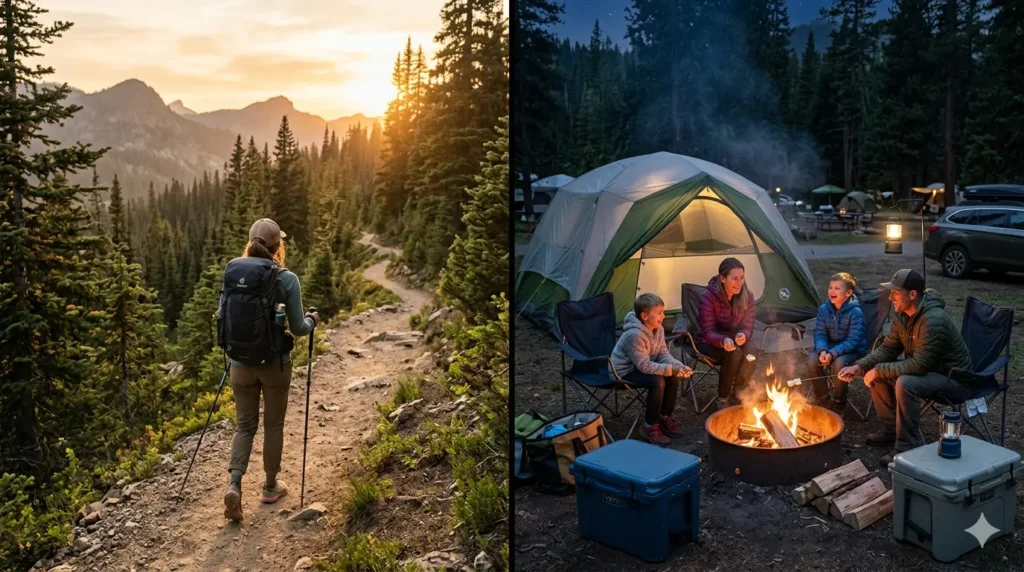
When you’re comparing backpacking vs camping, you’re really asking: “Do I want adventure or comfort?” The truth is, backpacking and camping are two fundamentally different outdoor experiences, and the choice between them depends entirely on what you’re looking for. If you’re trying to figure out the difference between backpacking and camping — whether you’re planning your first trip or just curious which one suits you — you’re in exactly the right place. This guide breaks down backpacking vs camping honestly, including gear, cost, difficulty, and which one actually makes sense for beginners.
Let’s get into it.
What Is Backpacking? Understanding Backpacking vs Camping’s Adventure Side
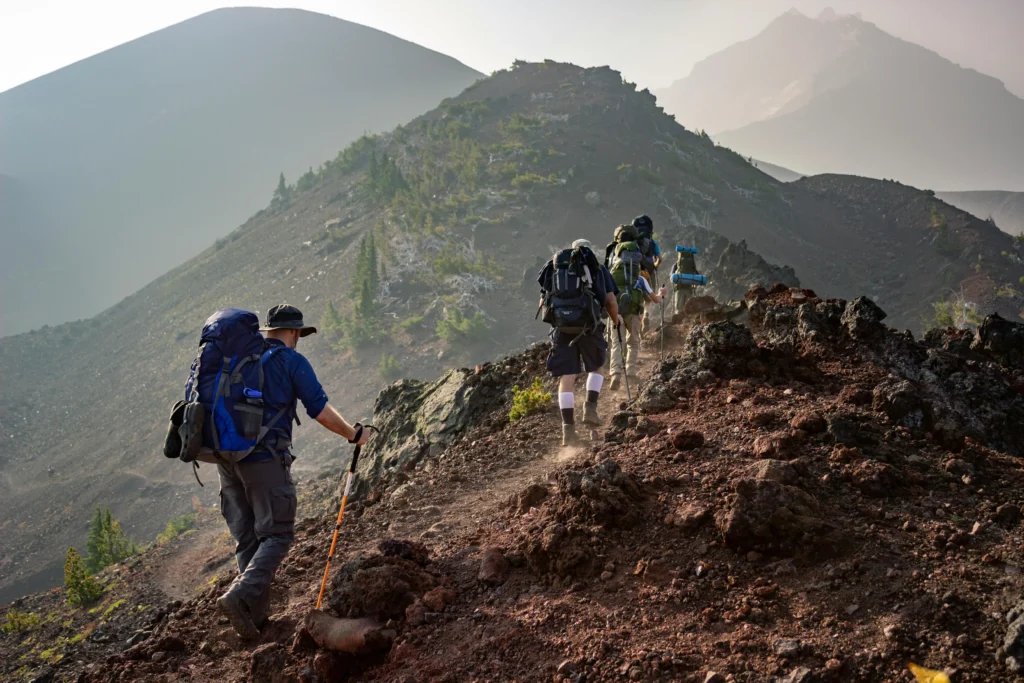
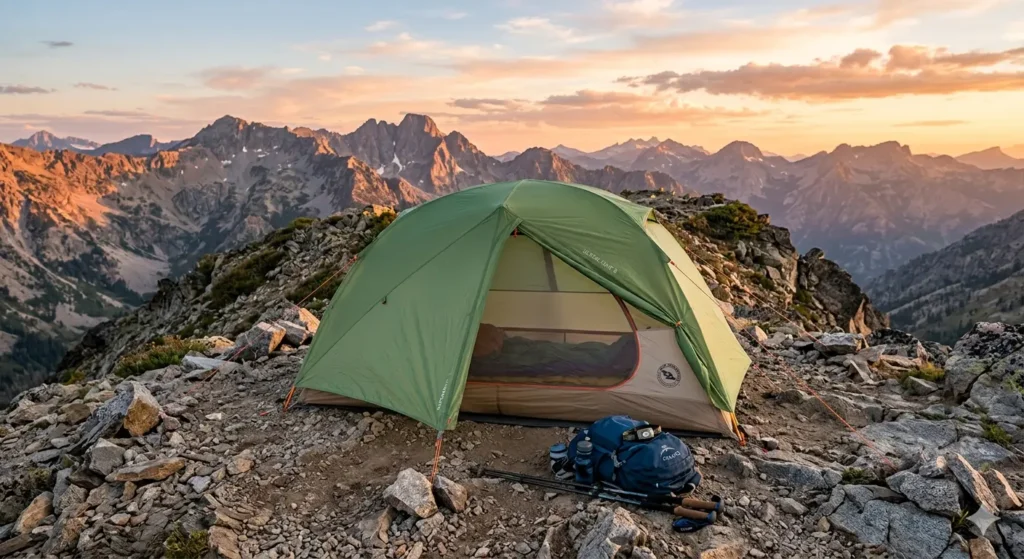
Backpacking means hiking into the backcountry — forests, mountains, trails — with everything you need packed into one bag on your back. You’re self-sufficient. No car nearby, no camp store, no electricity. Just you, the trail, and whatever you remembered to pack. It’s the more adventurous side of the backpacking vs camping debate.
A typical backpacking trip involves:
- Hiking several miles to reach your campsite
- Carrying a pack that weighs anywhere from 20 to 45+ lbs
- Sleeping in a lightweight tent or bivy shelter
- Cooking on a compact backpacking stove
- Filtering or purifying your own water from streams
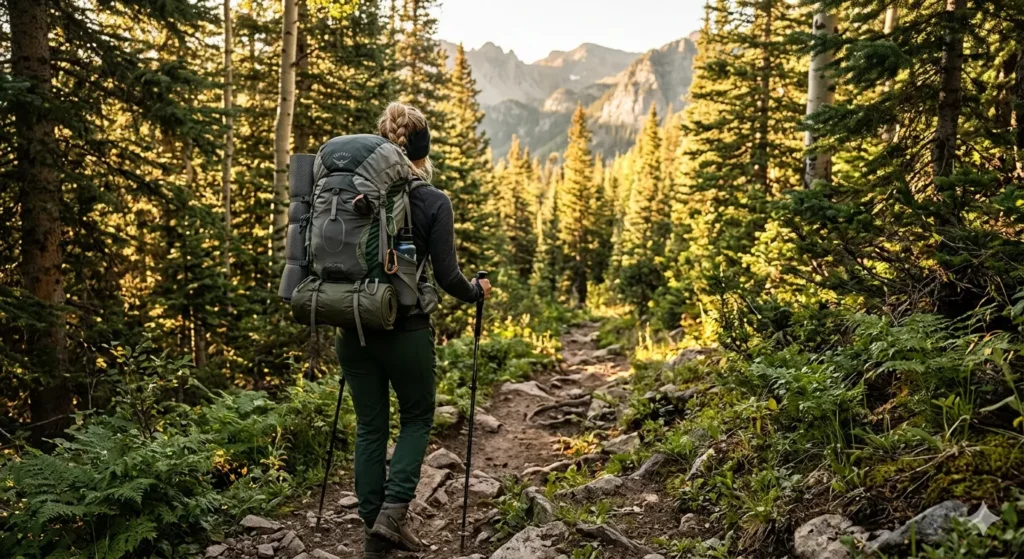
Backpacking is for people who want to escape the crowds, experience nature on a deeper level, and genuinely challenge themselves. That said, it’s not just for hardcore athletes. Beginners can start with short overnight trips on well-marked trails — and that’s honestly the smartest way to ease in.
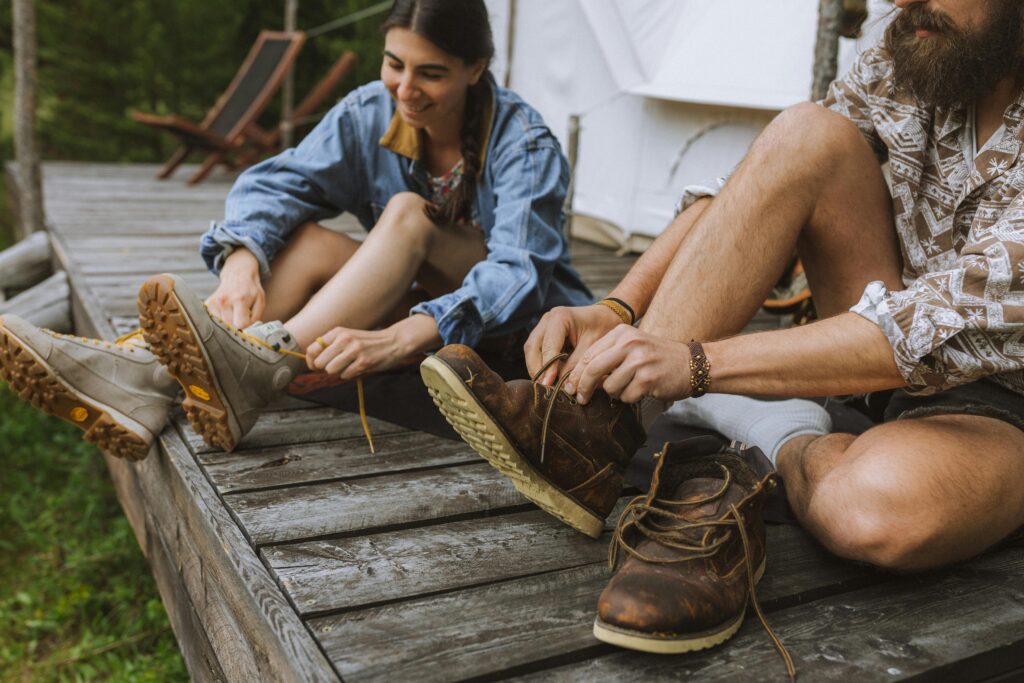
One thing most beginners don’t realize: the distance isn’t always the hardest part. It’s weight management and pace over multiple days that gets to you. Blisters from a 6-mile day feel very different on day 3 than day 1. Getting your footwear right from the start is critical — if you’re unsure where to begin, our guide on whether you need waterproof hiking shoes is a solid first read.
What Is Camping? Understanding Car Camping as the Comfort Alternative to Backpacking vs Camping
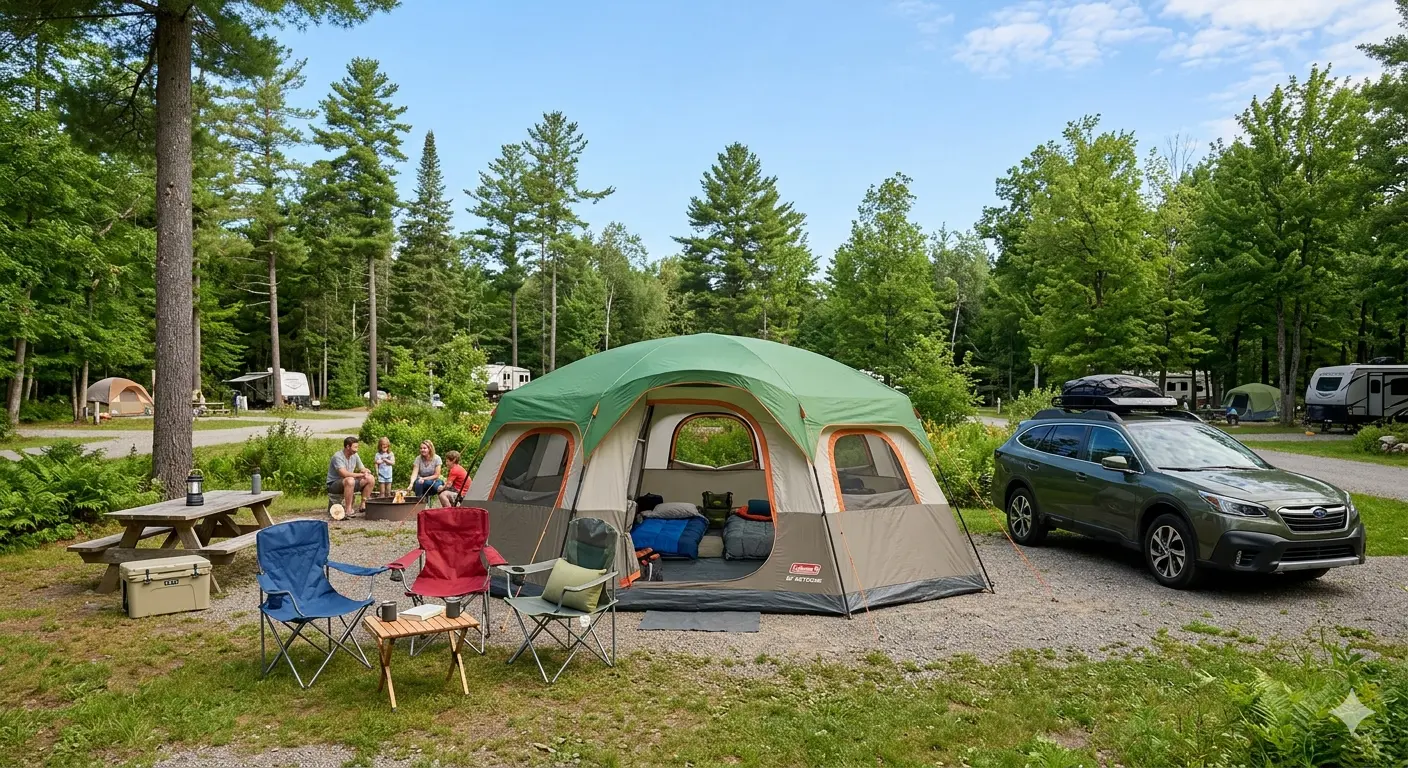
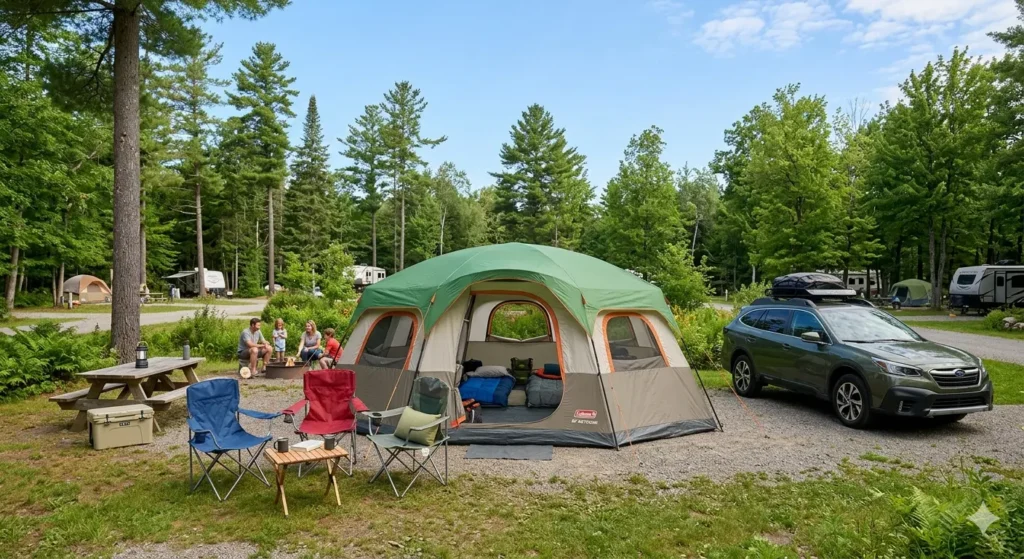
Camping — specifically car camping — is what most people picture when they hear the word: driving to a designated campsite, setting up a big tent, pulling out a cooler full of food, and relaxing around a fire. Your car is your base, so you can bring almost anything. When discussing backpacking vs camping, car camping represents the comfort and accessibility option.
Car camping typically looks like this:
- Driving to an established campground (state parks, national forests, private sites)
- Setting up a roomy tent or even a pop-up camper right next to your vehicle
- Cooking real meals with a full camp stove, cast iron, the works
- Enjoying amenities like bathrooms, fire rings, and sometimes showers
- Bringing the family dog, kids, comfortable camp chairs — whatever fits in the trunk
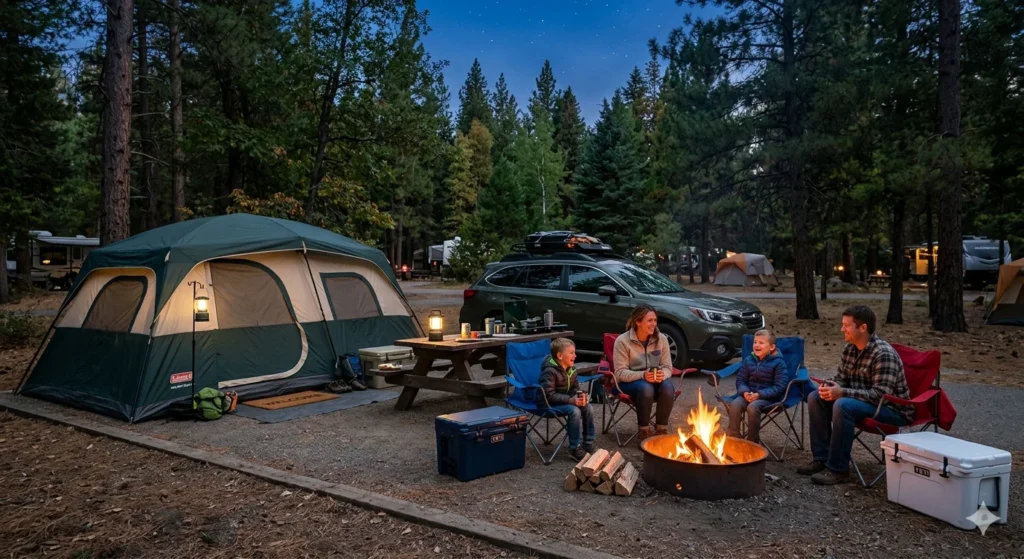
Car camping is genuinely wonderful. It’s accessible, affordable (compared to hotels), and a perfect way to introduce kids or friends to the outdoors without overwhelming anyone. The barrier to entry is low, and the experience can still be deeply satisfying.
The trade-off? You stay where the road ends. And sometimes, the most beautiful spots are miles beyond that point.
Backpacking vs Camping: Complete Side-by-Side Comparison Table
Here’s a clean breakdown of how backpacking vs car camping stacks up across the things that matter most:
| Category | Backpacking | Car Camping |
|---|---|---|
| Gear Weight | 20–45 lbs (everything on your back) | No limit (car carries it all) |
| Gear Type | Ultra-light, compact, minimalist | Bulky, heavy gear is fine |
| Cost (Upfront) | Higher (quality lightweight gear costs more) | Lower (heavier gear is cheaper) |
| Comfort | Minimal — you pack what you need | High — pillows, chairs, full meals |
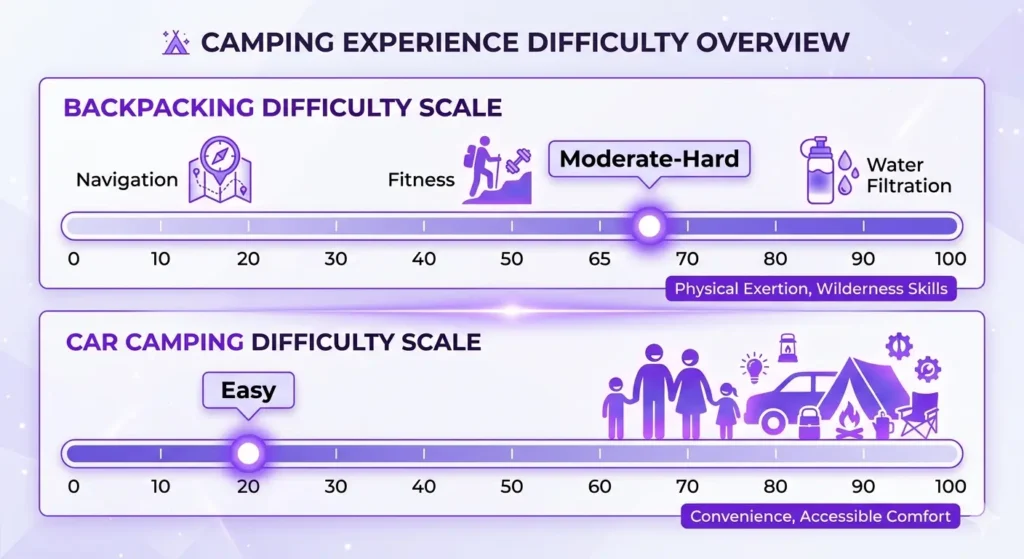
| Difficulty | Moderate to hard (fitness + skill needed) | Easy (accessible for all ages) |
| Location Access | Remote, off-road, backcountry | Established campgrounds, roadside |
| Experience Level | Best for intermediate to advanced | Perfect for beginners and families |
| Overall Vibe | Adventure, solitude, self-reliance | Relaxed, social, comfortable |
Key Differences Between Backpacking and Camping Explained
1. Backpacking Gear vs Camping Gear: The Core Difference in Backpacking vs Camping
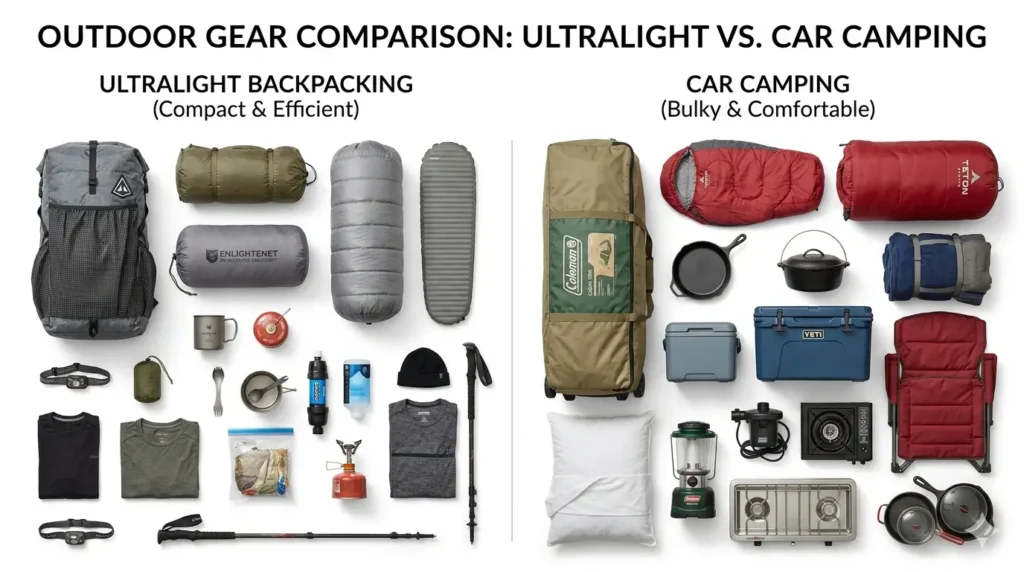
This is where the biggest gap shows up in the backpacking vs camping debate. Backpacking gear vs camping gear isn’t just about brand names — it’s an entirely different philosophy.
When you’re backpacking, every ounce counts. A backpacking tent weighs 2–3 lbs. A car camping tent might weigh 10–15 lbs — and nobody cares, because it goes in the trunk. Same goes for sleeping bags, stoves, and cookware. Backpacking versions are lighter, more compact, and almost always more expensive per item.
Car campers can bring a Dutch oven. Backpackers bring a titanium cup. Both cook dinner — just very differently.
2. Cost Differences in Backpacking vs Camping
The honest truth? Backpacking has higher upfront gear costs when comparing backpacking vs camping, but car camping can get expensive fast too if you’re buying bulky gear for a large family.
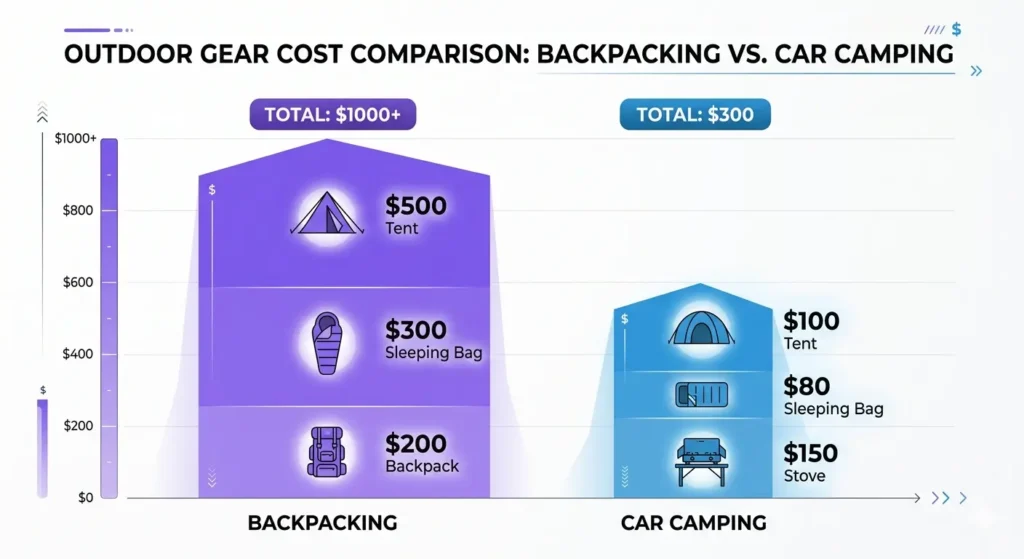
A solid lightweight backpacking tent from a brand like Big Agnes or Nemo runs $200–$500. A reliable car camping tent? You can find decent options for $80–$150. But here’s the thing — backpacking gear lasts for years if you take care of it, so the long-term cost evens out in the backpacking vs camping equation.
For ongoing trip costs, both are cheaper than hotels. Backpacking campsites (when you need a permit at all) often cost $5–$25 per night. Car campgrounds range from $20–$50 depending on the location and amenities.
3. Comfort vs Freedom: The Trade-off in Backpacking vs Camping
Car camping wins on comfort in any backpacking vs camping comparison. Full stop. You can bring a real pillow, a camp chair, a portable speaker, a big cooler with actual fresh food. It’s outdoor living with creature comforts, and there’s nothing wrong with that.
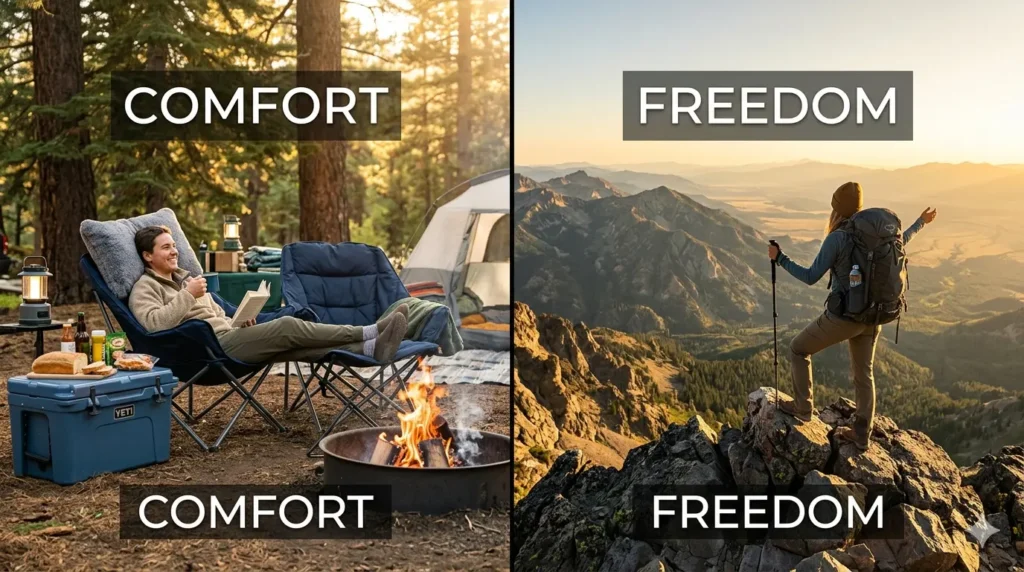
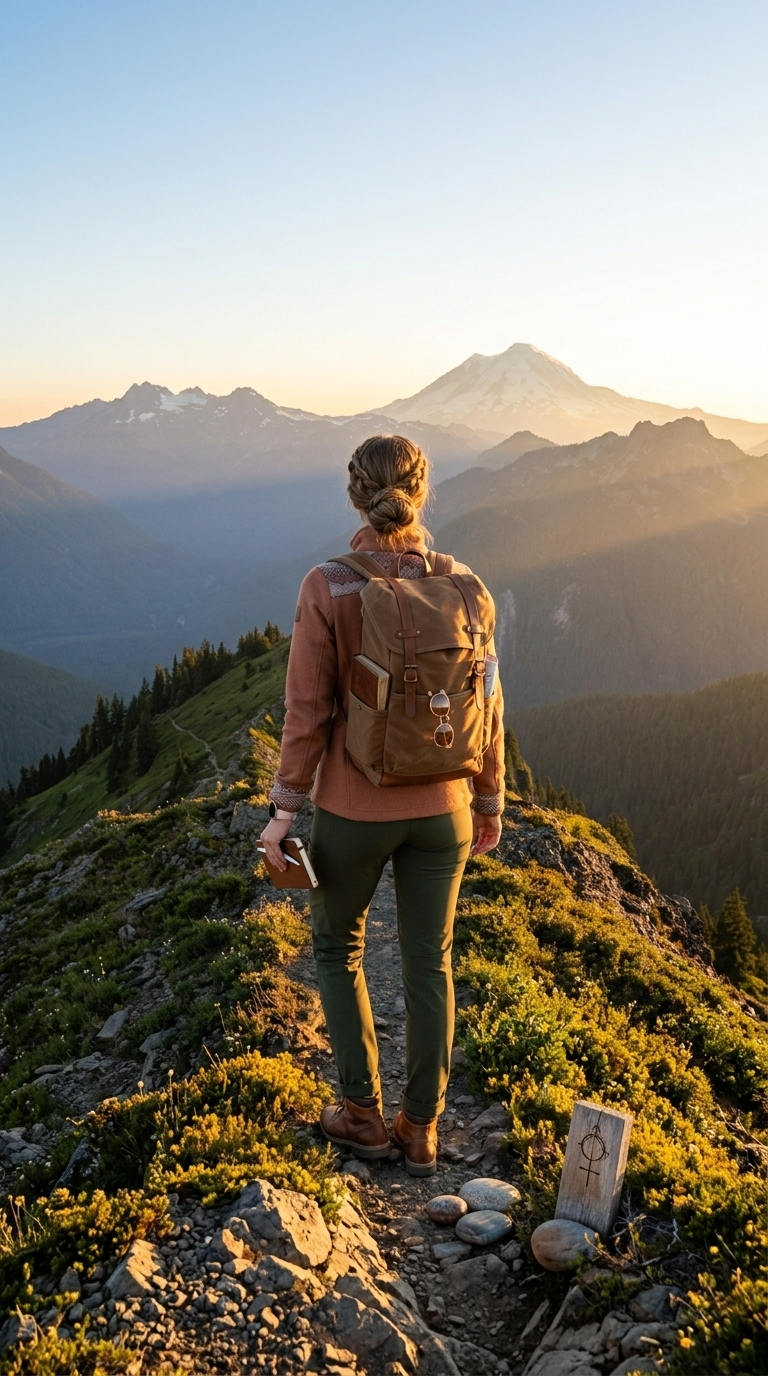
But backpacking wins on freedom and access. The views you earn after a 7-mile hike into the wilderness? You simply cannot get those from a roadside campground. The silence, the stars, the sense of being genuinely remote — that’s what keeps people coming back to backpacking year after year despite the extra effort.
4. Skill Level Required: Backpacking vs Camping
Car camping requires almost no technical skill. Backpacking, on the other hand, asks more of you in the backpacking vs camping challenge. Navigation (even just reading a trail map), Leave No Trace principles, water filtration, weight distribution in your pack, reading weather signs — these all matter in the backcountry. And your footwear matters more than most people expect — blisters from ill-fitting shoes will end your trip early. If you’ve had fit issues before, check out our guide to wide hiking shoes for options that won’t punish your feet on longer days.
This doesn’t mean backpacking is dangerous for beginners. It just means you need to prepare more intentionally before your first trip.
Pros and Cons: Backpacking vs Camping Compared
Backpacking Pros:
- Access to remote, stunning locations most people never see
- Deep sense of self-reliance and accomplishment
- Forces you to disconnect and be fully present
- Lighter environmental footprint in backcountry areas
Backpacking Cons:
- Higher gear investment upfront
- Physically demanding — not ideal without base fitness
- Less forgiving if you forget something important (rain gear especially — a packable rain jacket and a waterproof rain hat are non-negotiables)
- Requires more planning (permits, navigation, water sources)
Car Camping Pros:
- Extremely accessible — great for all ages and fitness levels
- Bring as much as you want (comfort, food, gear)
- Easier to manage with kids, pets, or large groups
- Lower skill barrier and gear cost to get started
Car Camping Cons:
- Often crowded, especially in peak season
- Limited to where roads go (missing the best backcountry spots)
- Noise, neighbors, and amenities can reduce the “wilderness” feel
- Can get expensive if you’re buying lots of gear for a big group
Which Is Better for Beginners? Backpacking vs Camping Guide
If you’ve never spent a night outdoors before, start with car camping. Get comfortable with sleeping outside, managing a camp setup, cooking outdoors, and knowing what gear you actually use versus what you packed “just in case.” It’s a crucial step that most people skip when starting the backpacking vs camping journey.
Once you’ve done a few car camping trips and feel confident, try a short backpacking trip — ideally 3–5 miles in, one night out. Pick a well-marked trail, check the weather, and don’t overpack. Dress smart too — knowing what to wear hiking in winter versus summer conditions can genuinely make or break your first overnight.
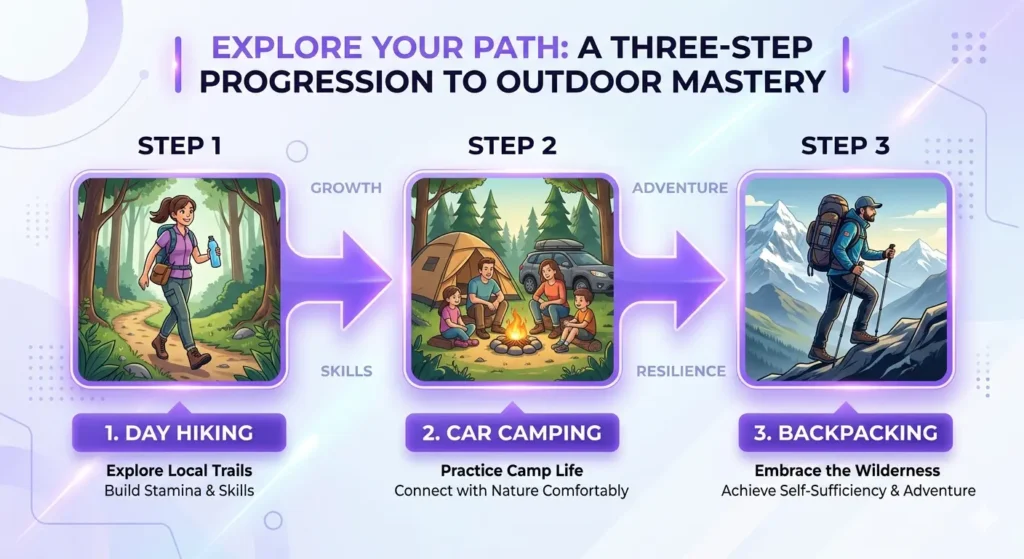
When comparing camping vs hiking vs backpacking, think of it as a progression. Day hiking is the gateway. Car camping teaches you overnight comfort. Backpacking combines both into something more immersive. You don’t have to rush the process.
A common beginner mistake: going too far, too fast, with too much weight. Your first backpacking trip should feel slightly easy. Save the 15-mile overnights for after you know exactly what you need — and what you don’t.
Essential Gear for Backpacking and Camping: Backpacking vs Camping Gear Guide
Backpacking Essentials
When choosing backpacking gear, lightweight and durable are your two non-negotiables. Here’s what you’ll need:
- Backpack (40–65L): This is your single most important purchase. A well-fitted pack with proper hip belt support makes all the difference on long days. If you’re starting out, a lightweight backpack in the 50L range hits the sweet spot between capacity and pack weight. → See our guide to the best hiking backpacks for women for top-rated picks at every budget.
Check Price on Amazon - Backpacking tent: Look for 3-season tents under 3 lbs with good ventilation. Double-wall construction matters for condensation management.
Check Price on Amazon - Sleeping bag + pad: A 20°F rated bag covers most 3-season conditions. A closed-cell foam pad or inflatable sleeping pad under your bag is often what separates a cold night from a comfortable one — don’t skip it.
Check Price on Amazon - Water filter: A Sawyer Squeeze or similar filter is lightweight, reliable, and one of the most important safety items you’ll carry.
- Backpacking stove + fuel: A canister stove like the MSR PocketRocket weighs next to nothing and boils water fast — exactly what you want after a long day on trail.
Car Camping Essentials
Car camping gives you the luxury of bringing real gear. A few items worth investing in:
- Roomy tent: A 4–6 person tent gives you room to move around. Weight doesn’t matter here — look for ease of setup and weather resistance. → Our best camping snacks guide also pairs perfectly with planning your camp meals.
Check Price on Amazon - Camp stove (2-burner): A propane two-burner setup lets you cook actual meals — scrambled eggs, pasta, stir fry. It’s a huge upgrade from hot dogs on a stick.
- Camp chairs + table: The Helinox Chair Zero is a cult favorite if you want something packable. For car camping, any sturdy folding chair works perfectly.
Check Price on Amazon - Sleeping bag + maintenance: Don’t sleep on the bare tent floor. A proper sleeping surface dramatically improves your sleep quality — and once you invest in a good bag, learn how to wash a sleeping bag properly so it lasts for years.
- Headlamp: Bring one per person, always. A reliable headlamp like the Black Diamond Spot is inexpensive and essential.
For a deeper breakdown of what to wear and pack, check our guides on what to wear hiking as a woman, the best hiking shorts for women, and women’s hiking socks for summer — the right clothing makes every mile more comfortable.
Frequently Asked Questions About Backpacking vs Camping
Is backpacking harder than camping?
Yes, in most cases. Backpacking requires physical fitness to carry a loaded pack over miles of terrain, plus skills like navigation, water filtration, and Leave No Trace practices. Car camping is significantly more accessible and requires little to no technical skill. That said, backpacking difficulty ranges widely — a 3-mile overnight on a gentle trail is very doable for most people with reasonable fitness.
Can beginners go backpacking?
Absolutely — but start small. Pick a short trail (3–5 miles), go with someone experienced if possible, keep your pack light (under 30 lbs), and choose a campsite you’ve researched thoroughly. Don’t attempt your first backpacking trip in challenging weather or on an unmarked route. A well-planned beginner trip is genuinely achievable and incredibly rewarding.
Is camping cheaper than backpacking?
Car camping gear is generally cheaper to buy upfront. You can get started with a basic tent, sleeping bag, and camp stove for well under $200. Backpacking gear costs more because lightweight materials are expensive to manufacture. However, backpacking trip costs (permits, fees) are often lower than car campgrounds with amenities. Long term, both are affordable outdoor hobbies compared to most alternatives.
Do you need a tent for backpacking?
Not strictly — some backpackers use a bivy sack, hammock, or tarp setup instead of a traditional tent. These options are lighter and can work well in good weather or forested terrain. That said, for most beginners, a lightweight 1–2 person backpacking tent is the most practical and weather-safe option. A good ultralight tent gives you protection from rain, insects, and wind without adding much weight to your pack.
So — Backpacking or Camping? Here’s How to Choose Between Backpacking vs Camping
The honest answer is: it depends entirely on what you’re after.
Choose car camping if you want a relaxed outdoor experience, you’re bringing kids or elderly family members, you want comfort and convenience, or you’re just getting started and want a low-pressure way to enjoy the outdoors.
Choose backpacking if you want to push yourself physically, experience true solitude and remote landscapes, travel light, and feel the genuine satisfaction of carrying your world on your back through beautiful wilderness.
And honestly? Most outdoor lovers end up doing both — depending on the trip, the season, and who they’re traveling with. They’re not competing hobbies. They’re just different tools for different adventures. Understanding the backpacking vs camping distinction will help you make the right choice for your next outdoor adventure.
If you’re ready to gear up, start with our guides to the best hiking backpacks for women, the best lightweight waterproof hiking boots, and the best hiking shorts to find exactly what you need without overspending.
Get outside. The trail doesn’t care how you get there.
This article contains affiliate links. If you purchase through our links, we may earn a small commission at no extra cost to you — it helps us keep writing guides like this one. We only recommend gear we’d actually use ourselves.